🌊 Character Spotlight: Sugandha

Sugandha is the quiet heartbeat of the Prophesied Prince trilogy. I’m deep in Book Two right now, so I’m living in her world every day—and she’s definitely taken up long-term residence in my head.

When we first meet her in Child of the River, she’s grieving the loss of the only family she’s ever known: her grandfather.

“Sorrow and grief filled my heart when I realized I would receive no more guidance from my grandfather. I had never known my parents, and my grandfather had raised me from birth.

Usually, I would stir into wakefulness at this time of day. From my cot, I would hear my grandfather in the kitchen, pulling down pots, grinding an array of herbs, and brewing them.

Those small sounds would bring me peace, and I would snuggle into my sheets and close my eyes… He would grin at me as if I brightened his day just by existing, his wrinkled face glowing.”

One of my favorite chapters featuring her is Chapter 31 (Summer, Year 1). There’s a certain innocence to Sugandha there—one that still survives even as she’s fighting for her life. She stumbles through chaos guided only by instinct and heart, doing what she believes is right, even when she has no idea what’s really happening around her. That combination of bravery and bewilderment is exactly what makes her so compelling to write.

Book Two lets me deepen her dynamic with Atul. These two couldn’t be more different—each carrying their own scars, their own expectations, their own definitions of who they should be. Watching them learn to trust each other, challenge each other, and sometimes collide spectacularly has been one of the joys of drafting this book. This moment between them is from earlier in book two:

“Look at me,” I said, and her eyes fluttered open.

“Imagine what it would mean to master that power,” I said, my voice low. I let the oars still in my hands.

She clenched her jaw, then closed her eyes again. Her breath evened out, arms stretching forward as if reaching for something unseen. I waited. But the river stayed calm.

Then she gasped—clutching her throat like something had seized it—and coughed, harsh and broken.

“Nanda—”

“No.” Her voice came between sobs, ragged and raw. “Stop. You think you understand what it’s like—to carry this wild, flickering thing inside me—but you don’t. You can’t.”

This trilogy is, at its core, a coming-of-age story. Through Sugandha, I wanted to portray a deeply human young woman—strong yet unsure, resilient yet overwhelmed, someone whose magic feels as dangerous as it is wondrous. Her journey isn’t neat or easy, and it mirrors the hardships a girl on the run would face in a world shaped by myth, patriarchy, and the weight of expectations. These are truths often left unexplored in traditional Indian mythology, and Sugandha gives me the space to write into those gaps.

She grows slowly. She stumbles often. But she keeps trying.
And that, to me, is what makes her unforgettable.
Character Spotlight: Prince Atul

Meet Atul — the Heir to Malla… just not by blood.

I feared that the men who revered me as the Heir to Malla would abandon me if they knew the truth about my birth. That was the reason I had urged my uncle, King Jay of Malla, to send me on this mission. Uncle Jay wanted me to wait until our soldiers had secured Kashgar, but I itched to prove myself.

Atul’s journey in Child of the River is a tangle of identity, duty, and the quiet ache of wanting to be enough. When his ships crossed the Nira Sea, he didn’t just bring soldiers—he carried the weight of his own questions about who he is… and who he desperately hopes to become.

One of my favorite moments to write is his exchange with the fake prince in Chapter 26 (Spring, Year 2). Those scenes crack Atul open a bit. The fake prince’s doubts mirror Atul’s own, and you see him slide into that big-brother role so naturally—steady, protective, and sometimes wiser than he realizes. And then, just as quickly, he’s unmistakably a teenager again: impulsive, earnest, and brave in ways that don’t always make sense but feel undeniably true.

Being Meera’s son (yes, that Meera from the Land of Magadha trilogy) gives me a chance to explore the complicated corners of his heart—respect tangled with resentment, admiration overshadowed by old hurt. His mother’s secrets shaped him, and in many ways, he’s still deciding what parts of that legacy he wants to claim.

Through Atul, I get to return to one of my favorite questions: What truly makes a good ruler? Birthright? Choice? Sacrifice? Something quieter and harder to name?

Atul doesn’t have the answers yet—but he’s determined to earn them.

On Sale for $0.99/£0.99

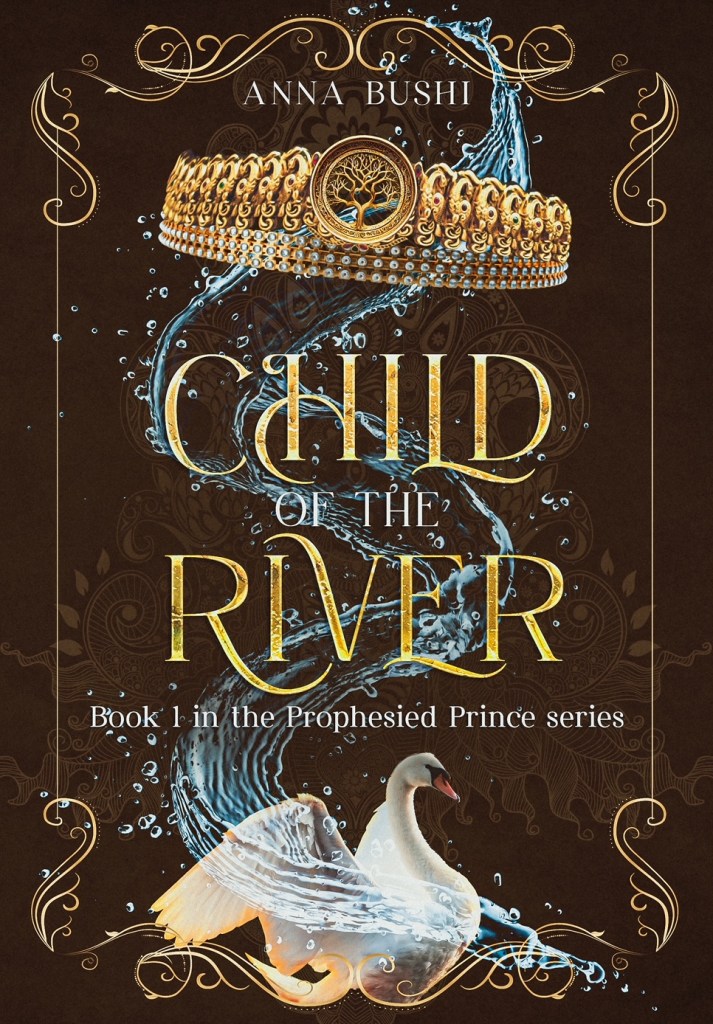
Child of the River Cover

🌊 A curse. A death. A prophecy begins.

On a storm-lashed shore, young Sugandha watches her grandfather call upon the god of fire to curse a ship of enemies. The sea roars, the sand trembles—and when the ritual ends, her grandfather lies motionless.

That night, he opens his eyes one last time.

“I have enough life force left to offer you a blessing… Conceal her from Ori. Your uncle poses a grave danger to your very existence.”

As the bells of her uncle’s cart echo in the distance, Sugandha flees the only home she has ever known—her journey entwined with a dying man’s curse and a prophecy that will shape the fate of kings.

⚔️ Child of the River — Book One of the Prophesied Prince Trilogy — is a sweeping medieval fantasy inspired by ancient India, filled with curses, rival kingdoms, and a destiny born of the river’s depths.

📖 On Sale for $0.99/£0.99
https://annabushi.com/books/prophesied-prince-series/

Enter the prophecy before it consumes them all.

Back to Kashgar: Legacy, Magic, and New Dangers

Book Two of the Prophesied Prince series is inching toward 50,000 words! In the latest chapters, we encounter descendants of characters from my Land of Magadha trilogy—members of the Malla army who came to Kashgar with Atul. Writing those scenes felt like coming home. After ten years in the world of Magadha, revisiting its legacy through new generations has been deeply satisfying.

Meanwhile, Sugandha is beginning to uncover the truth about her family and her powers. Something tells me she won’t be happy with what she learns.

Magical creatures continue to hunt our protagonists—but as always, the real danger lies in human heart.

Here is a snippet from Chapter two written in Atul’s POV:

“The rumor of your death has reached our ranks. The commander… he neither confirmed nor denied it. Instead, he told us—your five guards—to find you.”

I nodded. “Clever of him. That gives you a reason to follow me north.” I kept my voice steady, calm, though the thought of the others—young men who had followed me across the sea—believing I had fallen before even drawing my sword unsettled me. Still, I had to trust the commander. Trust that he’d keep them loyal without revealing the truth. That I was alive. For now.

If you haven’t yet read Child of the River (Book One), now’s the perfect time. The audiobook, narrated by two incredible voice actors, brings Kashgar vividly to life. Book Two is slated for release in 2026.

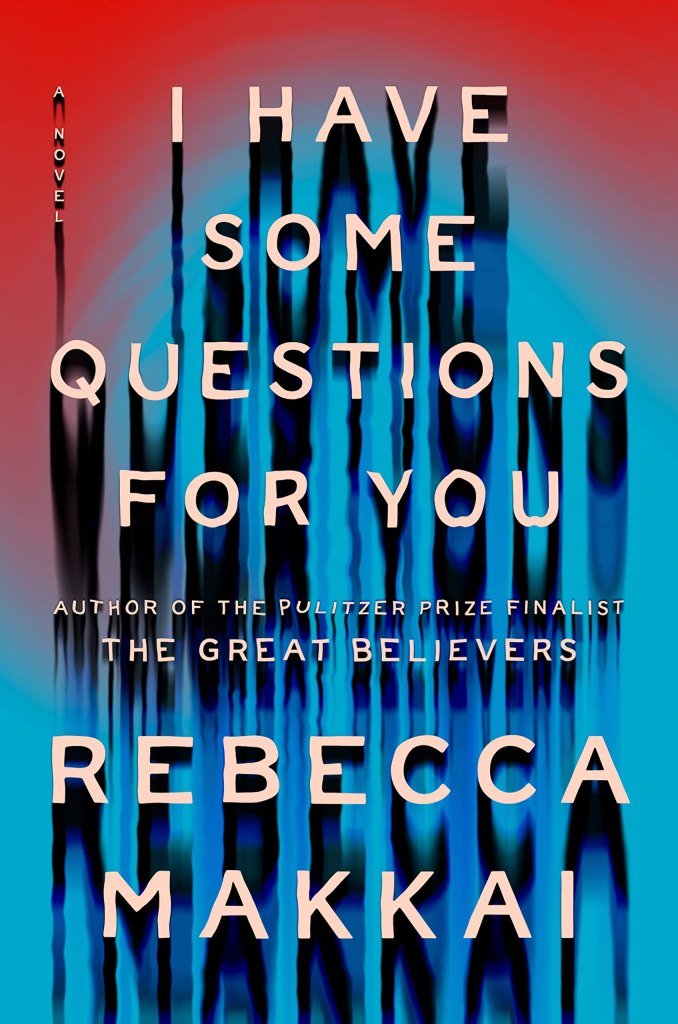
Book Review: I Have Some Questions for You by Rebecca Makkai

This is my first book by Rebecca Makkai, and it definitely won’t be my last. The protagonist, Bodie, is a messy, complicated woman—professor, podcaster, and mother—returning to the boarding school where she spent four formative years. As a teenager, she began by trying to fit in, then found acceptance with a small circle of friends who saw her for who she really was.

Her sophomore-year roommate, Thalia, was everything Bodie thought she wasn’t—rich, popular, beautiful. Though not close friends, there was mutual respect between them. When Thalia is killed during their senior year, the tragedy leaves deep scars. Years later, Bodie returns to teach at the same school, and one of her students chooses Thalia’s murder as the subject of a podcast. The story unfolds as a letter Bodie writes to a man she suspects had a significant role in Thalia’s death.

Back then, Omar, a Black athletic director, was convicted of the crime. Through Bodie’s eyes, the book explores racism, abuse, class, and gender norms—issues that continue to shape contemporary America. What I particularly liked was that Makkai doesn’t make Bodie fit neatly into any box. We humans are complex, and how we react when something touches us personally often differs from how we think we’d respond in theory.

The mystery of Thalia’s death forms the spine of the story, but what lingers is the reflection on memory, justice, and the messy gray areas between right and wrong. It’s not easy to write a novel that captures the pulse of our times while keeping readers fully engaged, but Makkai manages it beautifully.

The hell of imprisonment isn’t the terrible food, it’s the lack of choice of food. It isn’t the cold, wet floor, it’s that you can’t choose another place to stand. It isn’t the confinement so much as the fact of never running, never getting in your car and speeding off, as Omar loved to do.

My only nitpick: there are moments when too many societal issues crowd the narrative. Focusing on fewer might have given the story even more punch. Still, this is a powerful, thought-provoking read—one I’ll be thinking about for a while.

Don’t make my mistake: stay up late to read this book

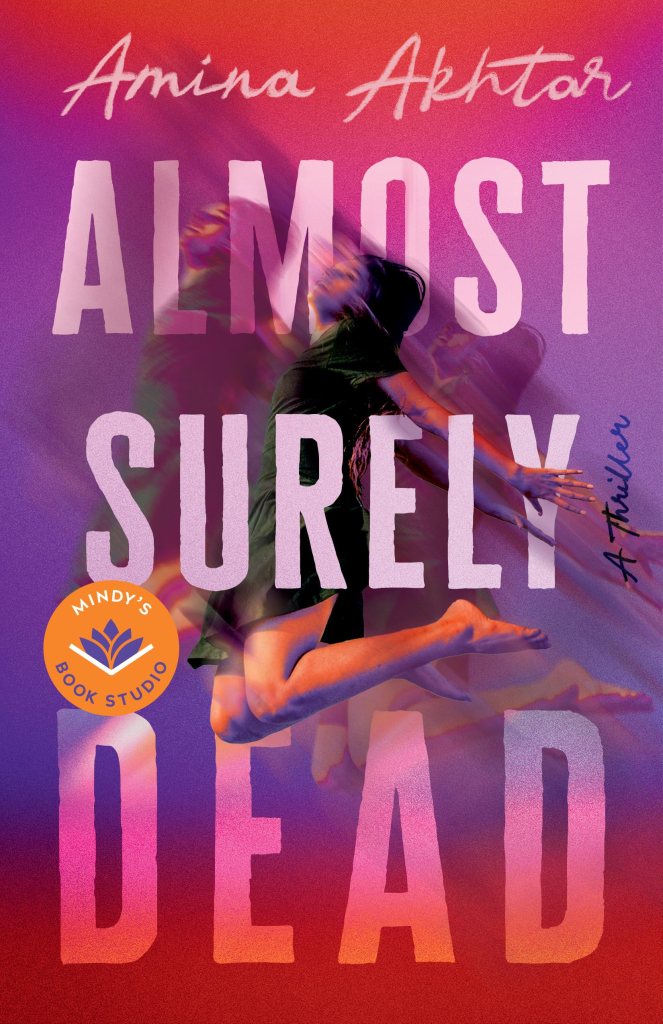
I normally don’t read psychological thrillers, but when Almost Surely Dead by Amina Akhtar was offered as part of Kindle First Reads, I decided to make an exception. I’ll admit—I don’t know much about Jinn folklore, but after reading this book, I’m definitely interested in learning more.

The story opens with Dunia, our protagonist, narrowly escaping death at a subway station. From there, the narrative flips between three threads: her five-year-old self, her present, and a podcast set in the future (that’s how I kept track, at least). The podcast narration was crisp, engaging, and if the author’s goal was to make them sound like slightly obnoxious true-crime podcasters, she nailed it. I’ve never listened to a podcast like this, so I can’t say if that’s the norm, but it felt authentic.

The sections with five-year-old Dunia and the podcast held the most reveals and kept me turning the pages. My only nitpick: present-day Dunia sometimes felt like she had less agency. Maybe that was intentional, a reflection of her cultural upbringing, but I wanted her to be more active in uncovering the truth about the folklore and the accidents.

“How do you grieve someone who hated you? I wasn’t sure how to, but I was trying.”

Overall, this was a gripping tale—creepy, layered, and unsettling. Just don’t make the mistake I did: stay up late, reading it in the dark.

What have I been up to?

I’ve just crossed 40,000 words on Book Two of the Prophesied Prince series (title still a mystery for now!). For the first time in years, I actually let myself take a break from writing while on vacation—wandering through a few national parks at the end of August was exactly what my creative well needed. Now I’m back in Kashgar, walking beside Sugandha on her journey, and the words are flowing again.

Here’s a little snippet from Chapter One, in her point of view:


“Nanda, tell me what you know about Purohit Parivan,” he asked again, and I blinked, as if surfacing from a dream.

Purohit Parivan. The name pulled me straight to my grandfather. I used to think his death was the hardest part. I hadn’t realized living without him would be worse.

“In his final moments, my grandfather told me to find Purohit Parivan. But the priest… he perished in a fire just ahead of my arrival.”

The priest appeared to me in a vision shortly before his death, but I kept that detail to myself. I didn’t know this prince well enough. Not yet.


This is just a glimpse of what’s to come, but I’m so excited about where Sugandha’s path is leading her—and the secrets waiting to be uncovered.

📖 If you haven’t yet read Book One, Child of the River, now’s the perfect time to dive into the series and meet these characters from the beginning. That way, when Book Two arrives in 2026, you’ll be ready to journey alongside Sugandha as the stakes rise even higher.

A Day to Remember

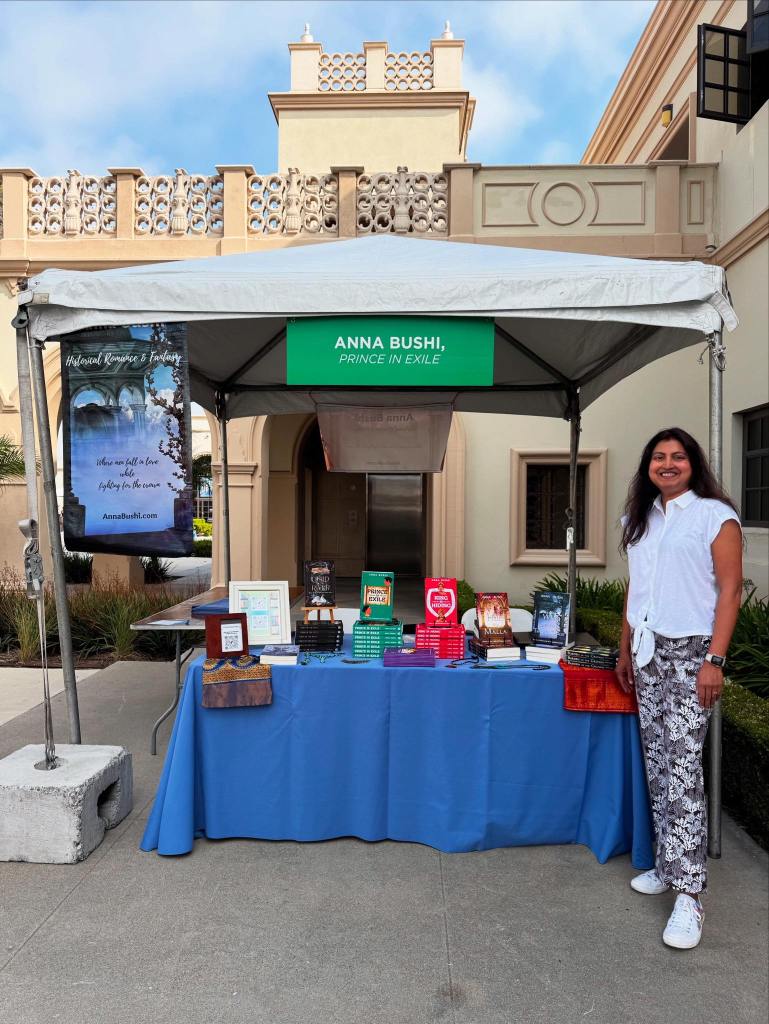
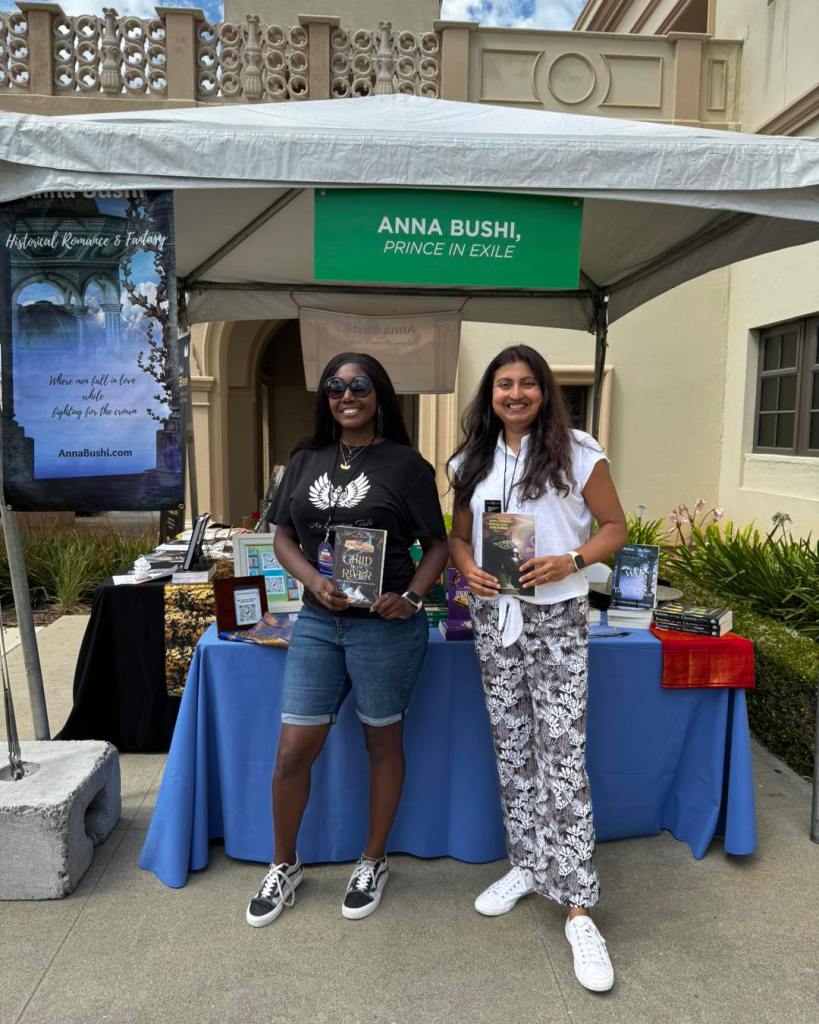
On August 23, a warm Saturday, I had the joy of participating in the inaugural KPBS San Diego Book Festival, presented at the University of San Diego. From the moment I walked in with my festival badge proudly stamped Author (a word that still makes me blink in disbelief, even after all these years), I knew it was going to be a special day.

Meeting Readers—and My Best Marketer Yet

The best part of any festival is meeting readers, old and new, and sharing my books with them. But this time, I had an extra-special helper—my daughter. She has read all my books (a feat in itself!) and turned out to be the most enthusiastic and persuasive bookseller at the table. Watching her share my stories with visitors, speaking with such conviction, was both humbling and heartwarming.

Connecting with Authors Old and New

One of the joys of festivals is reconnecting with fellow authors.

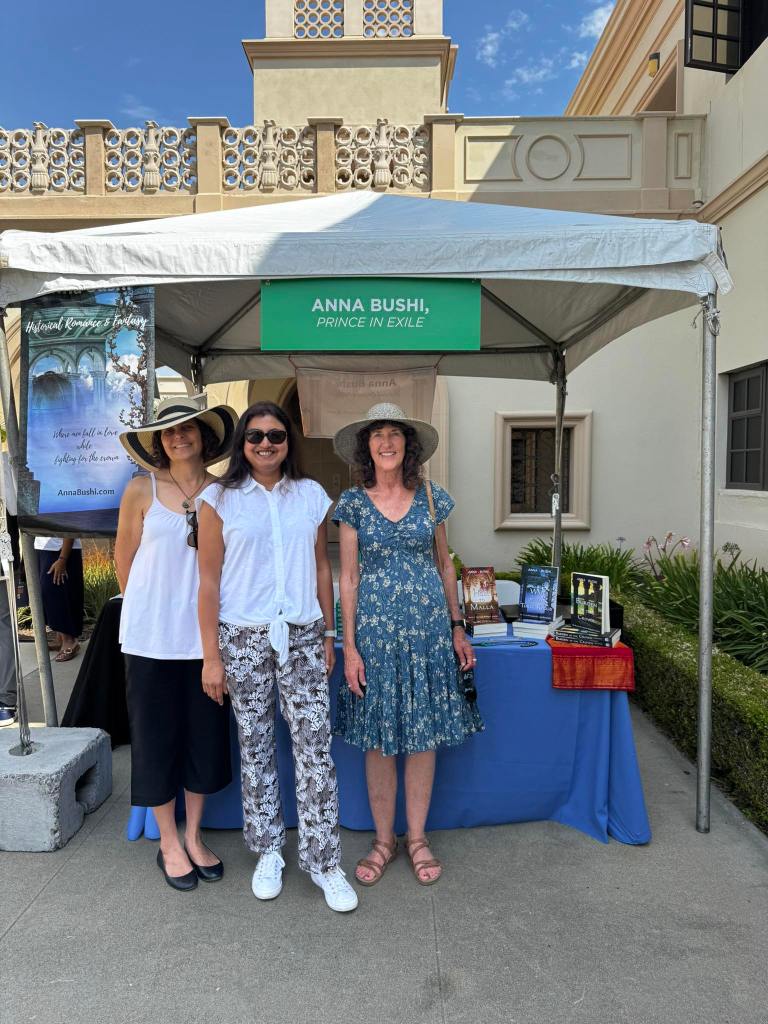
I caught up with Jolie Tunnell, who writes delightful mystery novels. Jolie and I have shared a tent before at the Encinitas Street Fair, and it was such a treat to snap a photo together again, swapping stories about books and events.

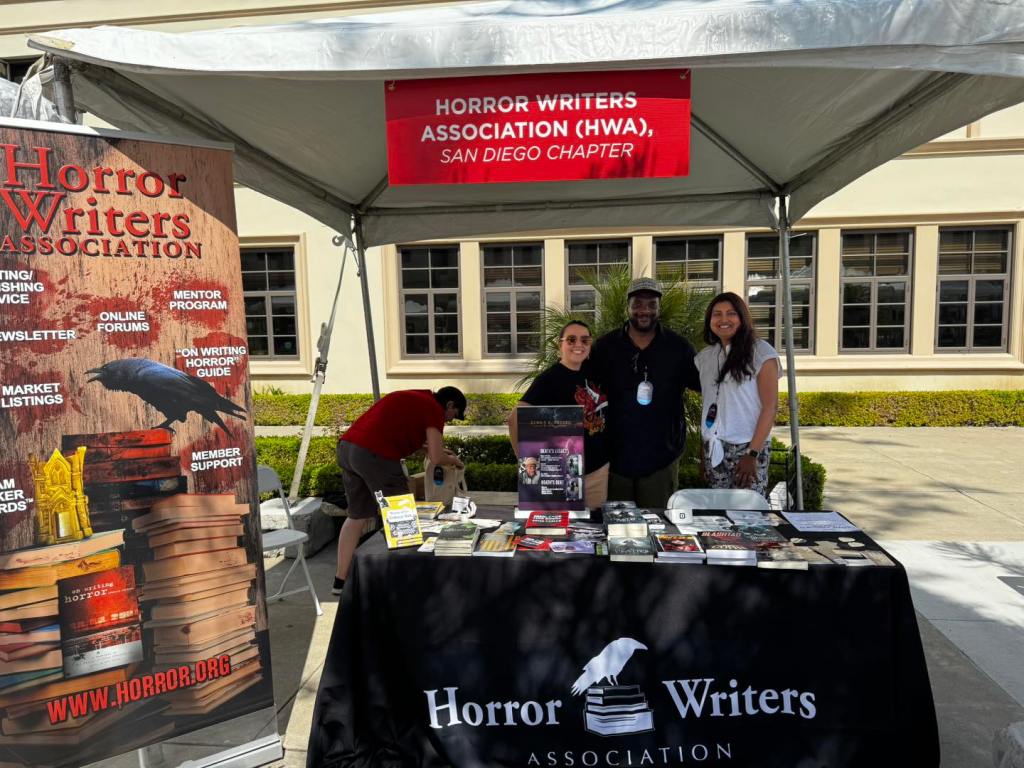
I was delighted to see Dennis K. Crosby and Sarah Faxon, two writers I’ve shared a table with in the past. Both were there representing the Horror Writers Association, San Diego chapter, and it was inspiring—as always—to see their passion for storytelling and community.

This year, I had the pleasure of sharing my festival tent with Veranice Berry, who writes YA novels inspired by Egyptian mythology. Our daughters came to help out, another thing we had in common. Veranice and I exchanged books, and I can’t wait to dive into hers. That’s the beauty of these festivals—the chance to connect not only with readers but also with fellow authors who inspire you.

A Festival to Remember

Between the conversations, the laughter, and the joy of seeing so many people come together to celebrate books, this festival was everything I hoped for and more. Huge thanks to KPBS and the University of San Diego for creating such a vibrant, welcoming event for authors and readers alike.

I came away with new memories, new books to read, and a deep sense of gratitude—for stories, for community, and for the chance to share my work in such a wonderful space.

Here’s to many more festivals like this one.

When Dickens Meets Appalachia

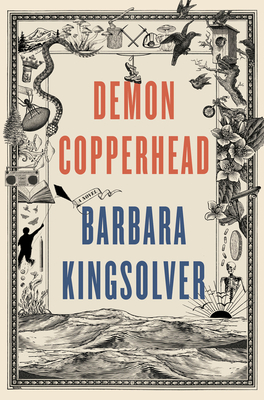
I first read David Copperfield by Charles Dickens as a child, and it might be time for another reread to see how the story feels through adult eyes. A Tale of Two Cities remains one of my favorites—I’ve read it several times—and I keep a Dickens collection at home. So when I picked up Demon Copperhead, Barbara Kingsolver’s reimagining of Dickens’ classic, I knew I was in for something powerful. What I didn’t expect was just how much this book would squeeze my heart with every chapter.

Kingsolver brings Damon, a boy born to a teenage mother, vividly to life. The early chapters, focused on his childhood, were especially heavy—I often had to pause after a single chapter to take a breath. When your heart aches for a fictional character, you know the author has done something extraordinary.

Her writing is remarkable. I could smell the dumpster where Damon hides one night, dirty, hungry, and desperate. The characters she creates are unforgettable—you only have to read the chapter where U-Haul first appears to see her genius at work. It’s fitting that Damon is an artist himself, because through his eyes, people are described with such raw precision they leap off the page.

Having lived in a coastal city all my life, I found myself rooting for Damon to one day see the ocean. This is a book that touched my heart deeply and will linger in my mind for a long time to come.

Some of my favorite quotes from the book:

“The wonder is that you could start life with nothing, end with nothing, and lose so much in between.”

“This is what I would say if I could, to all smart people of the world with their dumb hillbilly jokes: We are right here in the stall. We can actually hear you.”

“The moral of his story was how you never know the size of hurt that’s in people’s hearts, or what they’re liable to do about it, given the chance.”

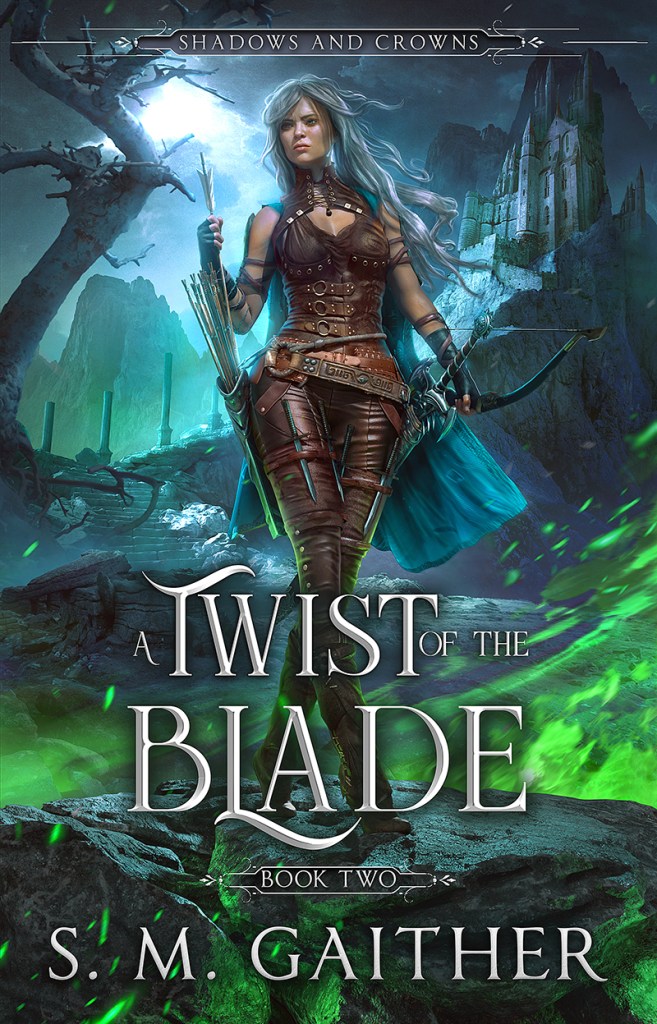
Book Review: A Twist of the Blade (Shadows and Crowns, Book 2)

I read Book One of the Shadows and Crowns series back in October 2023, so some time had passed before I picked up A Twist of the Blade. Even so, I remembered the story well enough to jump right in, which says a lot about how memorable the first book was.

A Twist of the Blade picks up right where Book One left us—on that cliffhanger—and plunges us deeper into the Shadows and Crowns series. In this installment, we meet several gods and finally gain more clarity on how Cas came into her powers. The story also expands beyond familiar borders as we encounter royalty from other kingdoms, broadening the scope of the world.

Cas continues to wrestle with her royal heritage, and much of the book is devoted to her journey toward fully embracing it. At the same time, we learn more about Elander’s past, with a twist that adds new depth to his relationship with Cas.

The pacing wasn’t quite as tight as in the first book, but the blend of mythology, character growth, and world-building kept me engaged. I’m invested in these characters and their journeys, and I’m looking forward to seeing what unfolds in Book Three.

“You can be afraid, and you’re allowed to feel stuck…you just can’t stay there. You have to keep going until you see what’s on the other side of that fear.”

“In this lifetime and in every other.”