Hello, fellow time travelers! I am so excited to kick off this journey with you. There is something uniquely terrifying and thrilling about opening up the pages of a world I’ve built and saying, “Take off your shoes and come on in.”
If you’ve been following my work, you know Prophesied Prince trilogy is a spin off of my Land of Magadha trilogy. If you’re new here—welcome to the family! Child of the River is where we start a brand new chapter together.
Before we dive into the secrets of the river, a few house rules:
⚠️ A Fair Warning
This post contains spoilers for the prologue and the first ten chapters. If you haven’t grabbed your copy of Child of the River yet, consider this your sign to go get it, find a cozy corner, and catch up so we can chat about it together.
🎨 A Note on History vs. Heart
While I strive to honor the vibrant textures of Indian culture, customs, and (most importantly) food, please remember that I am an author of fiction, not a historian. I’ve taken plenty of artistic liberties to make the magic and the world feel real. To the historians out there: I beg your forgiveness!
Why You Can’t Skip This Prologue
I know, I know. Some of you are “Prologue Skippers.” You want to get straight to Chapter One. Don’t do it. Not only does this Prologue set the stage for everything Sugandha is about to face, but it’s the secret bridge between worlds. For those who have read my Land of Magadhatrilogy, what happens here explains exactly what that mysterious ship was doing at the end of Burden of the Crown.
Read the rest of the secrets and see the historical inspirations on my Substack.
One of the themes I constantly return to, whether I’m writing romance or fantasy, is the question: What truly makes a good ruler?
In my daily life, I’ve always been fascinated by government and policy. In my writing, I find that medieval India provides the perfect “laboratory” to explore these ideas. Setting my stories in this era—specifically emulating the rich culture and laws of the 9th to 11th centuries—allows me to examine leadership and the “human heart in conflict” without the interference of modern political biases.
Medieval India possessed such complex layers of governance that it creates a fantastic playing field for my characters. This is why my protagonists are often of royal blood; it places them at the intersection of love, duty, and the ultimate test of character. I love placing these characters in difficult situations to see how they learn to survive and lead, even when their own power is fragile.
For me, a great leader must be able to sacrifice their own desires for the good of the kingdom. We see this struggle throughout the Prophesied Princetrilogy as Prince Atul grapples with his identity and the weight of his future. He follows in the footsteps of his mother, Meera, from the Land of Magadhaseries, who had to choose between her heart and her land.
I’d love to hear from you: If you could choose just one quality for a leader to have, what would it be? Leave a comment and let’s discuss!
As an author, I am constantly living in the minds of my characters, but sometimes the modern world breaks through with a fascinating bit of trivia. The other day, I heard a segment on the radio about the term “Hat Trick.”
Coming from a background where I appreciate the nuances of cricket, I’ve always known it as that rare, celebrated phenomenon where a bowler takes three consecutive wickets. But I never knew the literal origin! Apparently, in 19th-century England, a bowler who achieved this feat was actually presented with a new hat bought by his club. It’s a bit funny to imagine, considering cricketers usually wear caps, yet the tradition demanded a proper hat. There is no hat given to cricketers in modern day games but they are well compensated by other means.
Even more interesting? The tradition migrated to Ice Hockey. When a player scores three goals, spectators throw their beanies and headgear onto the rink in celebration. While “hat tricks” and ice rinks are completely useless for medieval Indian fiction, I enjoy learning the history of words and it helps me understand how traditions evolve—much like how I enjoy exploring the ancient customs of the Swayamvara in my romance series.
With everything going on in the world lately, I’ve found myself retreating into stories that offer both comfort and deep reflection. I truly believe that fiction allows us to experience the lives of the past and draw parallels to our present. Here is what has been keeping me company:
Healing with Simon Snow
I recently turned to Rainbow Rowell’s Simon Snow series. If you haven’t discovered her work yet, I recommend starting with Fangirl. It’s a delightful story about a protagonist finding herself through writing fan fiction for a series similar to Harry Potter.
The Simon Snow series is that fan fiction brought to life.
Book One (Carry On): The “Chosen One” meets his destiny and falls in love. Once the character Baz appears, the book is all heart.
Book Two (Wayward Son): This feels like the author’s fantasy come alive—she brings these characters to her home state of Nebraska! I completely relate to this; what is the point of being an author if you cannot write your fantasies on paper?
Book Three (Any Way the Wind Blows): This explores the real aftermath of the hero’s journey. How does one move on once the “evil” is destroyed? It was beautifully written and exactly what I needed to heal.
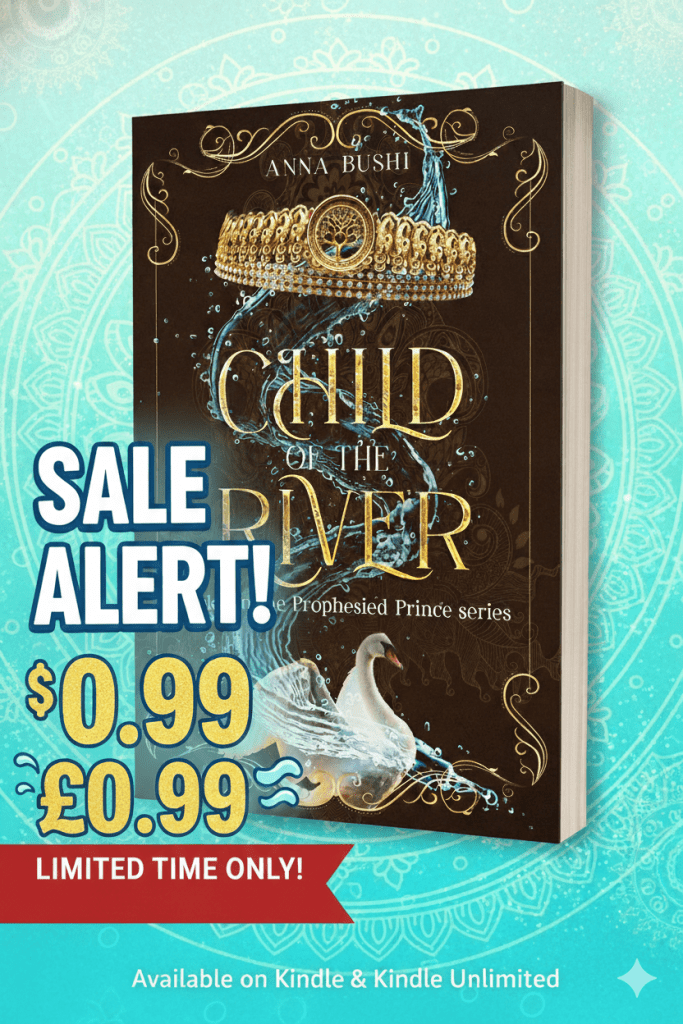
If you haven’t yet stepped into the world of the Prophesied Prince, now is the perfect time. To celebrate the upcoming sequel, Child of the River (Book One) is currently on sale for just $0.99 / £0.99 in the US and UK.
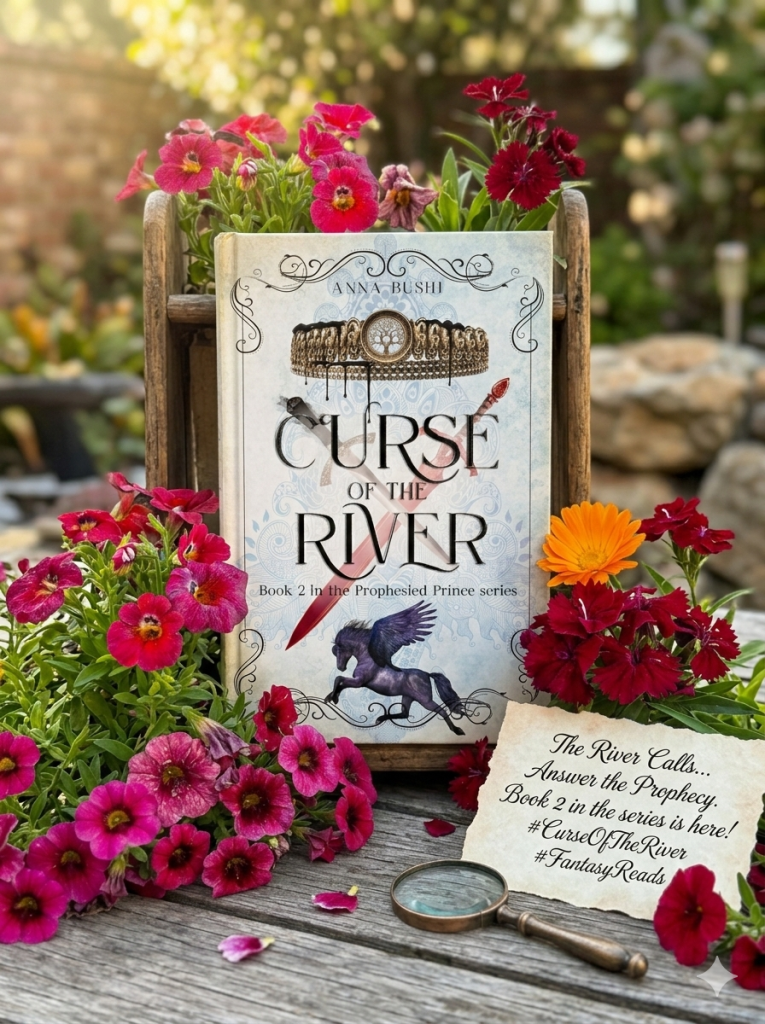
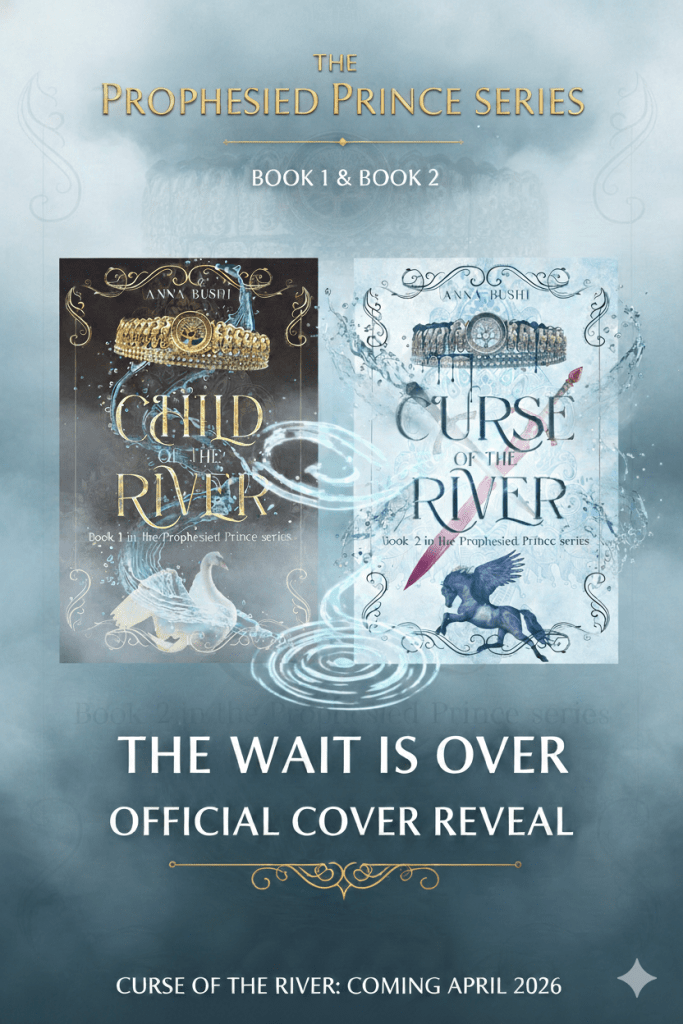
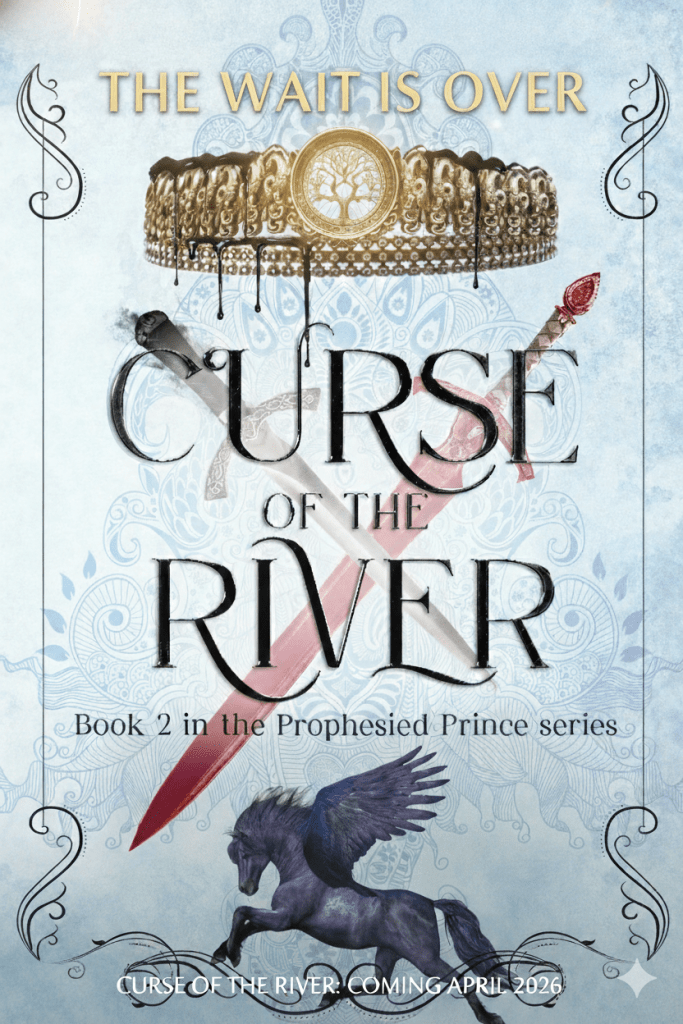
I am absolutely delighted to finally reveal the cover of my upcoming novel, Curse of the River, the second installment in the Prophesied Prince trilogy.
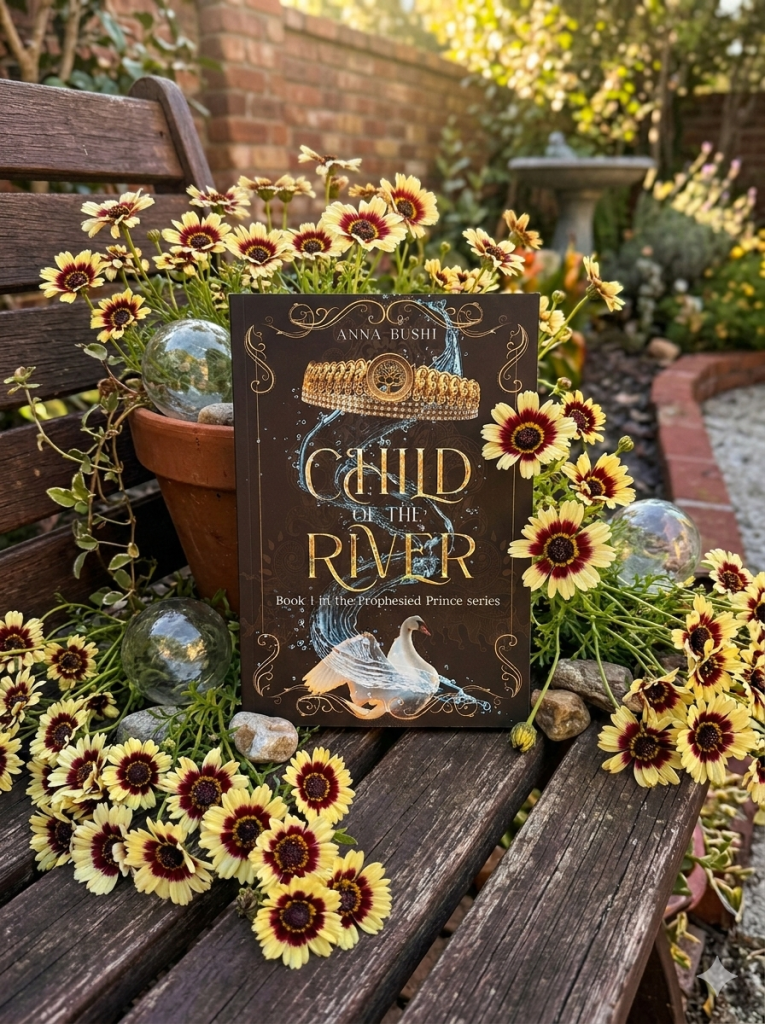
This cover has quickly become one of my favorites. To keep the visual thread tied to the first book, Child of the River, I have returned to the imagery of the crown of Kashgar. However, as the story evolves, so does the symbol of its power.
What to Look For:
A Muted Legacy: While the first cover featured a crown surrounded by cascading water, this crown is a much muted gold.
Darker Omens: You’ll notice something dark dripping from the crown—a nod to the fact that this sequel is a significantly darker journey than the first.
New Symbols: Instead of the swan, we have introduced a winged horse. This rakshasa (demon or monster) and other mythical ones play a pivotal role in the story, and I can’t wait for you to encounter them.
The Blades: In the center, you’ll see two blades crossing. They hold significance to the difficult path Prince Atul and Sugandha must walk together.
This cover perfectly captures the heart of this book and the growing danger lurking in the lands of Kashgar. Let me know in the comments what you think about this cover.
One of the greatest joys of being part of the author community is coming together to share our worlds with you. I’ve joined forces with several other writers to group our stories into themed collections, making it easy for you to find your next great read.
Since many of you are following along as I prepare for the launch of Curse of the River in April 2026, these collections are a perfect way to catch up on my previous works at a great value.
✨ Sci-Fi & Fantasy in Kindle UnlimitedChild of the River (Book One of the Prophesied Prince Trilogy) is currently featured in this massive collection of otherworldly tales. If you are a Kindle Unlimited subscriber, you can dive into the world of Kashgar right now!
Act Fast: This promotion ends March 16, 2026.
📜 Historical Fiction: Kindle Unlimited February Edition If you want the full epic experience, the entire Land of Magadha trilogy ebook boxset is featured here. Follow the Malla siblings, Princess Meera and Prince Jay, through three decades of royal secrets and shattered hearts.
Act Fast: This promotion ends March 6, 2026.
🥀 Historical & Literary Fiction Lovers For those who appreciate the lyrical side of historical storytelling, the Land of Magadha ebook boxset is also part of this specially curated group. It is the perfect companion for readers who love exploring the human heart in conflict within medieval India.
Eighty-three thousand words in, the story finally learned how to stand on its own—and then promptly broke my heart.
This book has been living in my head for a long time, but writing it still surprised me. One of the unexpected joys was returning to familiar ground. A few characters with ties to The Land of Magadha slipped into this story, and weaving those threads back to my very first series felt deeply satisfying. It reminded me that these worlds are still alive—that time has passed, but nothing is ever truly left behind.
At the center of Curse of the River are two protagonists thrown together whether they like it or not. They spend a lot of time irritating each other, challenging each other, and—very reluctantly—learning from one another. Writing their interactions became one of my favorite parts of the book. Their conversations are sharp, sometimes petty, often restrained, and always revealing. They don’t grow through grand declarations, but through friction.
Rakshasas—shape-shifting demons from Hindu mythology—make several appearances, and they are anything but gentle. Their presence pulls the story into darker territory, putting our protagonists in real, mortal danger. They’re clever, cruel, and deeply unsettling, and I loved letting them haunt the edges of the narrative.
But the heart of this book belongs to Sugandha.
As she begins to understand where she comes from—and what that truth costs—the story itself changed shape. Some answers can’t be uncovered without loss, and some truths leave scars. Walking Sugandha toward that realization was both exhilarating and devastating.
And then there’s the ending.
I won’t say much, except this: writing it broke my heart into many pieces. It felt inevitable and earned—and still cruel. The kind of ending that stays with you long after the final line.
As I move into revisions, I’m holding tightly to what made this draft special: the echoes of older worlds, the sharp companionship at its center, the danger hiding behind every transformation, and the emotional price of truth.
More soon. For now, I’m letting the river run where it will.
If you’re reading along on Kindle Unlimited this month, a few of my books are part of special January collections—all available to borrow in KU.
Heir to Malla is included in this collection, which highlights first-in-series reads. If you enjoy immersive historical worlds, political intrigue, and slow-burning emotional stakes, this is a great place to begin the Land of Magadha trilogy.
Both King in Hiding and Broken King are featured in this romance-focused KU collection. You’ll find a wide range of love stories here—from quiet, character-driven journeys to emotionally charged royal romances.
This Kindle Unlimited collection celebrates fresh starts and second chances, and it includes King in Hiding and Broken King. If you’re in the mood for stories about renewal, healing, and unexpected love, this collection is worth browsing.
For fans of Circe and Elektra, a powerful retelling about the woman behind one of the greatest Greek myths. An entertaining young adult/mythology/epic novel available in KU.
If you have Kindle Unlimited, feel free to explore these collections and borrow whichever story catches your fancy. It’s a wonderful way to discover new authors—and perhaps revisit a familiar world.
Choosing favorites is always hard, but these five books refused to let go of me. I kept thinking about them long after I turned the last page—pausing to reread passages, sitting quietly with my thoughts, and feeling everything. These are the books that stayed.
Rules of Civility by Amor Towles
I devoured this one in three days—sneaking pages in with my morning coffee and choosing it over television at night. There are no dragons here, no epic quests or looming catastrophes. Instead, Towles gives us exquisite prose, beautifully drawn characters, and a New York City that feels alive on the page. It’s elegant, immersive, and quietly unforgettable.
Demon Copperhead by Barbara Kingsolver
I first read David Copperfield as a child, and Dickens has always had a permanent place on my shelves (A Tale of Two Cities still holds my heart). So I expected Kingsolver’s reimagining to be powerful—but I wasn’t prepared for how much it would ache. Chapter after chapter squeezed my heart. When you start worrying about a fictional character as if they were real, you know the author has done something extraordinary.
The Office of Historical Corrections by Danielle Evans
This was my first time reading Danielle Evans, and it absolutely won’t be my last. These stories are sharp, unsettling, and astonishingly precise. Each one gently pulls the rug out from under you—questioning history, memory, and the assumptions we don’t even realize we’re carrying. More than once, I just sat there afterward, breathless. Read these slowly. Let them sit with you.
Children of Blood and Bone by Tomi Adeyemi
I finally picked up my signed copy—one I bought from my local bookstore, Mysterious Galaxy, during the pandemic—and I’m so glad I did. This is a fierce, heart-pounding start to a series, rooted in real-world mythologies and brought vividly to life. The magic is rich, the stakes are high, and the emotional core hits exactly where it should.
The Dandelion Dynasty by Ken Liu
I finished Speaking Bones, the final book in the series, and honestly—wow. How does one mind imagine a world this vast, filled with so many deeply human characters? Ken Liu brings four books’ worth of intricate plotting to a powerful, satisfying close, even weaving one of the gods back into the story. This is epic fantasy in the truest sense, and it’s absolutely worth the journey.
🌸 Honorable Mentions
The Kiss Quotient by Helen Hoang — Warm, heartfelt, and beautifully written. Stella and Michael lived up to all my hopes.
Never Meant to Stay by Trisha Das — A modern Indian romance that left me smiling. I’ll definitely be reading more from her.
Conclave by Robert Harris — I watched the movie first (I know, I broke my own rule), but the book still surprised me. A gripping look at papal elections, full of intrigue and a sharp twist.
The Worldly Philosophers by Robert L. Heilbroner — Thoughtful and illuminating. A reminder that the people who shaped economic thought were deeply human—flawed, curious, and fascinating.
If there’s one thing this list reminds me of, it’s how generous reading can be—from quiet literary novels to sweeping fantasy, from romance to philosophy. These books shaped my year, and I’m grateful for every one of them.