My first review of 2026

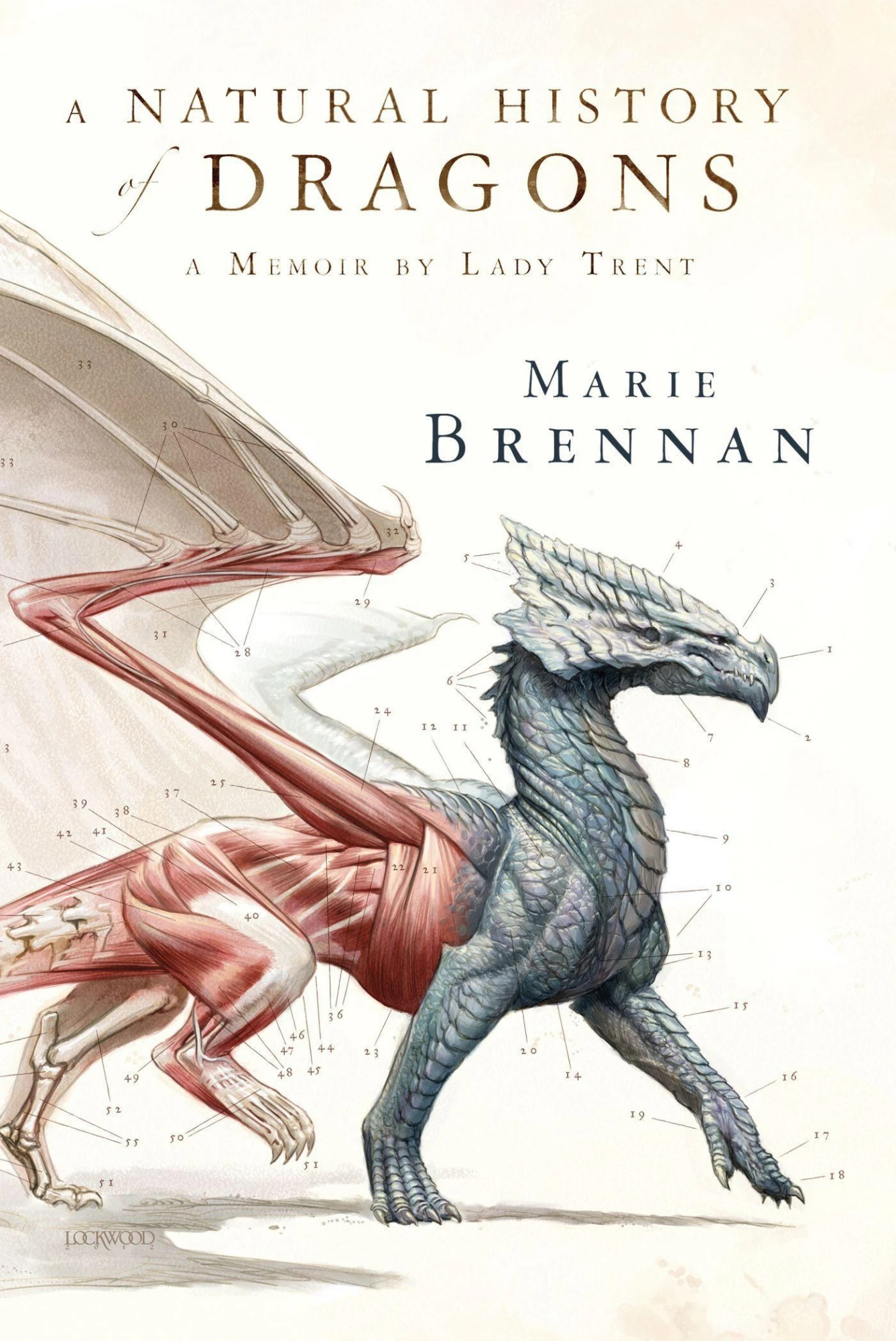
First off, hats off to the beautiful artwork that accompanies this book—the dragon illustrations are absolutely stunning. This is a very different kind of fantasy from what I usually read. Set in a Victorian-era–inspired world, the story unfolds as the memoir of our protagonist, Isabella, written when she looks back on her life beginning at nineteen.

The author paints a clear and vivid picture of Isabella: a young woman deeply passionate about science, and dragons in particular. One of my favorite scenes is a quiet, heartwarming moment with her father, who recognizes her love for learning. In a world where she is unlikely to be allowed to pursue her passions, he gives her a list of potential suitors who at least own the books she loves—so she can keep reading. It’s such a tender, realistic gesture, told entirely in the voice of a scientist, and it made me smile.

“A husband willing to fund a library for his bookish wife is not so easy to obtain; most would see it as a pointless expense. You might, however, find one willing to share his library.”

Isabella’s meeting with her future husband and their courtship are described with the same analytical restraint—observed, measured, and yet surprisingly moving. The author somehow manages to keep everything fully in character while still warming the reader’s heart. Isabella’s first expedition with her husband forms the backbone of the novel, chronicling their study of dragons, complete with a touch of mystery and a wonderful cast of side characters, each with distinct personalities.

“The dragon within my heart stirred, shifting her wings, as if remembering they could be used to fly.”

My only reservation is the ending, which didn’t quite deliver the same emotional punch as some of the earlier moments. That said, this is a wonderful premise, thoughtfully executed. This kind of fantasy won’t be everyone’s cup of tea, but if you enjoy historical fiction with a speculative twist, this is well worth picking up.

A Fitting Farewell to the Witcher Series

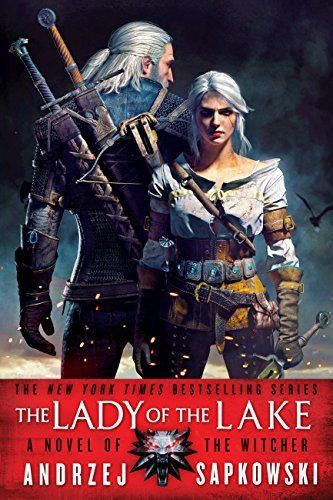
I wondered how the author would conclude this fantasy series with so many characters, plots, and subplots, and I was pleasantly surprised by the ending. In the previous book, we left Ciri in a different world with the elves, who knew of the prophecy and her supposed role in it. In this book, Ciri is trying to return to Geralt and Yennefer, who are each fighting their own battles.

The Battle of Brenna is one of the highlights of the novel. Told through multiple points of view—especially from the perspective of the field hospital staff struggling to save lives—it is written with remarkable skill and emotional impact. Another clever narrative choice is the way the author lets us glimpse the future, where the present story has already turned into legend, and then allows those future characters to influence events in the present.

The ending is open to interpretation, and I can see how some readers might be unhappy with it—particularly with how Emperor Emhyr’s quest concludes, what becomes of Geralt and Yennefer, and where Ciri ultimately ends up. For me, though, this was a satisfying, if unorthodox, conclusion to the series.

This is a series that will truly benefit from a reread; there are so many Easter eggs and layered details that are easy to miss the first time around. I am not sure when I would have the time or energy to re-read the series. Happy reading.

“I’m alive, she thought. So it’s not the end of the fight. The fight only end with death, everything else is just an interruption”

“Any dream that we dream for too long becomes a nightmare. And from it we awake with a scream.”

Few Treats for Your TBR

December is always a generous month in the book world, and this year my books are part of several wonderful group promotions run by fellow authors. If you’re looking to stock up your winter reading pile—especially if you have Kindle Unlimited—this is a great time to do it.

If romance is your comfort read, King in Hiding and other romance novels are part of a KU Romance Sprint running through January 9, 2026. These are perfect “just one more chapter” reads for cozy evenings, and an excellent excuse to make the most of your KU subscription.

Fantasy readers, I haven’t forgotten you. Child of the River is included in Fantasy Adventures on Kindle Unlimited, which runs through January 8, 2026. If you love immersive worlds, magic, and long journeys, this is a treasure trove of KU reads waiting to be discovered.

And if the word free makes your reader heart beat faster: Prince in Shadow is part of Fantastic FREE Fantasy – December, available through December 31, 2025. Consider this my small holiday gift to you. 

While you’re browsing, I also want to highlight a KU fantasy:
Shattered Kingdom: Episode One of the Nobledark Fantasy Serial by Jon Cronshaw.

Three sisters. One murdered king. A kingdom on the brink.

With savage wyverns, decaying magic, and a conspiracy centuries in the making, this nobledark fantasy is rich with betrayal, sisterhood, and sacrifice. 

If you love Robin Hobb, Katherine Addison, or Samantha Shannon, this is one to add to your list before the kingdom burns.

December is the season of stories—old favorites, new discoveries, and worlds waiting to be explored. I hope you find something here that keeps you warm through the longest nights of the year. 📖✨

Looking Ahead: My Writing Goals for 2026

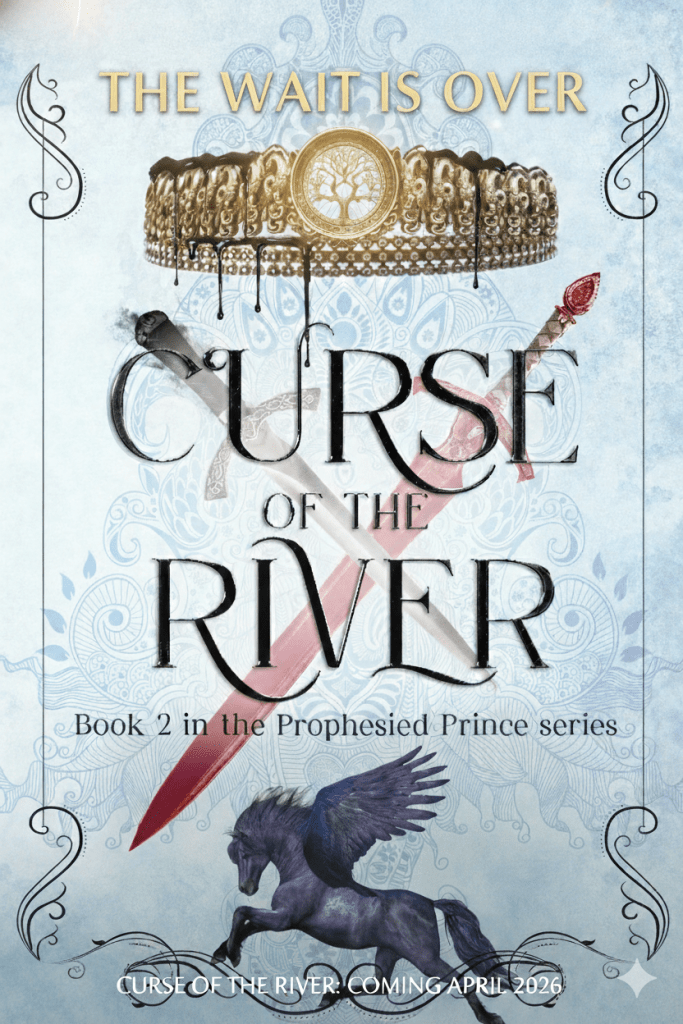
As I look toward 2026, my writing path feels both clear and a little daunting—in the best possible way. My primary goal is to publish Curse of the River, Book Two of the Prophesied Prince trilogy, and then keep my momentum going straight into writing Book Three, the conclusion of Sugandha and Atul’s journey.

This trilogy has always been a coming-of-age story at its heart—about power that is inherited, power that is chosen, and the cost of both. I’ve been planting seeds for the ending since Book One, even when I didn’t fully understand what they would grow into. Now, as I write deeper into Book Two, I can see the shape of the finale forming on the horizon.

I know this much: the ending will be bittersweet. How much bitter and how much sweet? Even I don’t know yet. My characters certainly don’t. They’re still making choices, still stumbling, still hoping. And I’m following them, page by page, trusting that the story will reveal exactly the ending it demands—whether it breaks my heart a little in the process or not.

What I do know is that I want to give this world, these characters, and you—the readers who’ve walked this road with me—the most honest ending I can write. One that lingers. One that feels earned.

Here’s to a year of rivers that refuse to stay calm, prophecies that don’t behave, and stories that insist on being told.

A Title Revealed

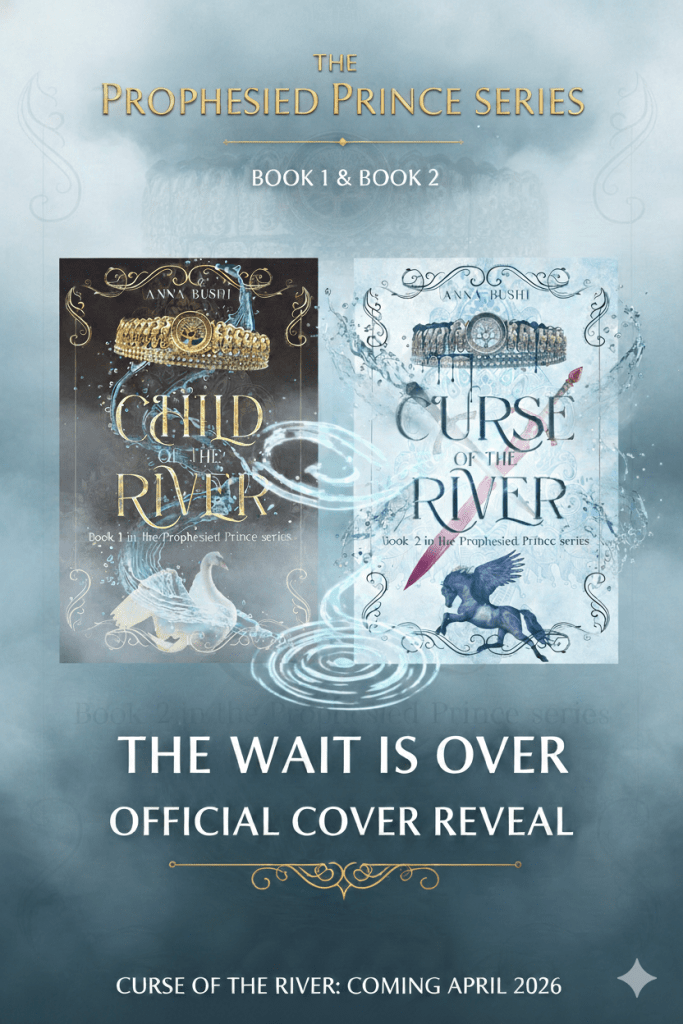
As I close out 2025, it feels right to finally share something I’ve been carrying quietly with me for months—the title of Book Two in the Prophesied Prince trilogy.

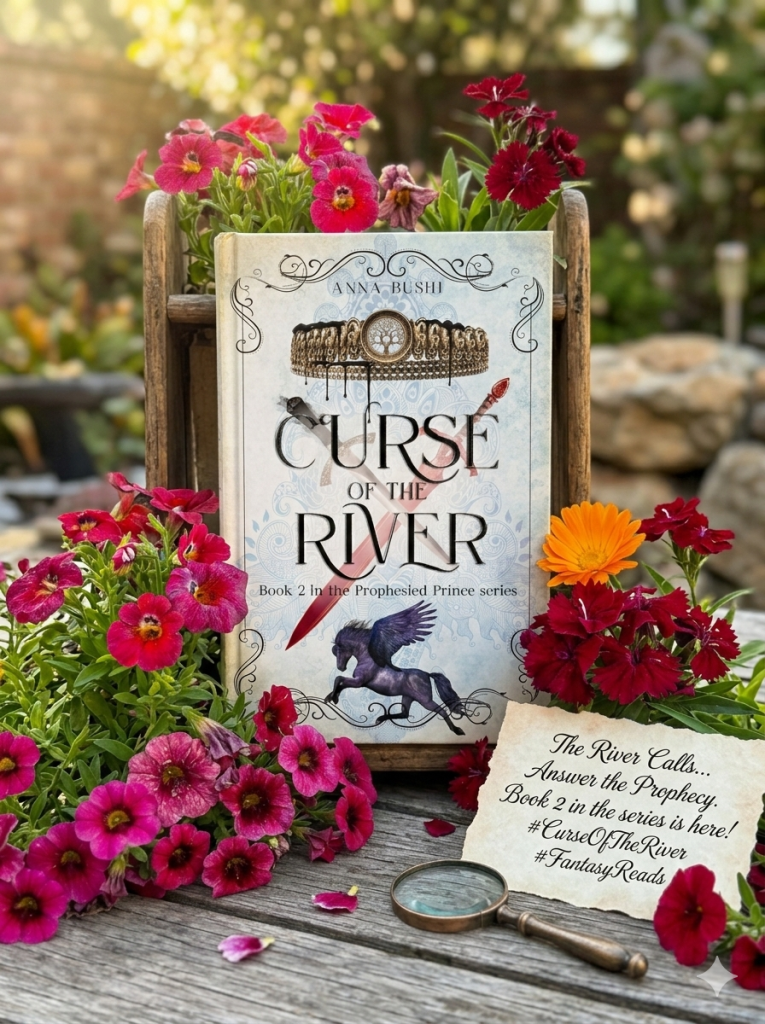
Curse of the River.

If Child of the River was about beginnings—a prophecy awakening, a girl fleeing grief, a prince crossing the sea—then Curse of the River is about aftermath. About what lingers once the river has spoken, once the curse has been cast, and once running is no longer enough.

Rivers, in this story, are never just water. They remember. They witness. They bless—and they punish. In Book Two, the river that shaped Sugandha’s fate refuses to loosen its grip. The magic deepens, the truths grow sharper, and the cost of survival becomes harder to ignore. Sugandha is no longer only a girl on the run; she is a young woman beginning to understand that power, once awakened, demands to be reckoned with. And Atul—still haunted by who he is and who he is not—must decide what loyalty, leadership, and sacrifice truly mean when curses do not stay neatly in the past.

I chose this title because it reflects what this book has become for me while writing it: darker, more intimate, and more unforgiving. The river does not simply carry them forward—it tests them. And sometimes, it turns against those who think they understand it.

Revealing this title feels like a promise. To higher stakes. To deeper bonds. To consequences that ripple far beyond a single choice or a single shore.

Welcome to Curse of the River.

Witcher Book Review – Tower of the Swallow (Book Four)

This book picks up right where Book Three left off, with our protagonists scattered across the continent, each desperately trying to reach the others. The story unfolds through multiple POVs, across shifting timelines, and with what feels like dozens of characters and locations. I only vaguely remember some of the peripheral players, yet it never diminished my enjoyment or my ability to follow along. That may not be the case for all readers, but for me, the sheer scope of this world is part of the charm.

“Mamma, are they demons? Is it the Wild Hunt? Phantoms from hell? Mamma, mamma! Quiet, quiet, children. They are not demons, not devils . . . Worse than that. They are people.”

I remain in awe of the complex, deeply layered world the author has built—and the authentic voices he manages to give every single character. Not much “happens” in the grand scheme of the series arc. The violence and torture are graphic, and I skimmed those sections.

Geralt is no longer hunting monsters; he is knee-deep in political intrigue, trekking toward Ciri with a vampire, Dandelion, an archer, and Cahir as companions. Their interactions and misadventures are consistently engaging. Dandelion is, of course, writing a memoir—glimpses of which we get—and it adds a humorous, meta touch. Yennefer appears only briefly, while Ciri’s story is mostly told in flashback, and just when we catch up to the present timeline… the book ends abruptly.

Some sequences, like the ice-skating scene near the end, are elaborate and beautifully constructed—showcasing the author’s incredible choreography. I’m honestly not sure how he plans to wrap up this sprawling saga in one final book, but I’m eager to find out. I’ll be diving into the next one soon.

🌊 Character Spotlight: Sugandha

Sugandha is the quiet heartbeat of the Prophesied Prince trilogy. I’m deep in Book Two right now, so I’m living in her world every day—and she’s definitely taken up long-term residence in my head.

When we first meet her in Child of the River, she’s grieving the loss of the only family she’s ever known: her grandfather.

“Sorrow and grief filled my heart when I realized I would receive no more guidance from my grandfather. I had never known my parents, and my grandfather had raised me from birth.

Usually, I would stir into wakefulness at this time of day. From my cot, I would hear my grandfather in the kitchen, pulling down pots, grinding an array of herbs, and brewing them.

Those small sounds would bring me peace, and I would snuggle into my sheets and close my eyes… He would grin at me as if I brightened his day just by existing, his wrinkled face glowing.”

One of my favorite chapters featuring her is Chapter 31 (Summer, Year 1). There’s a certain innocence to Sugandha there—one that still survives even as she’s fighting for her life. She stumbles through chaos guided only by instinct and heart, doing what she believes is right, even when she has no idea what’s really happening around her. That combination of bravery and bewilderment is exactly what makes her so compelling to write.

Book Two lets me deepen her dynamic with Atul. These two couldn’t be more different—each carrying their own scars, their own expectations, their own definitions of who they should be. Watching them learn to trust each other, challenge each other, and sometimes collide spectacularly has been one of the joys of drafting this book. This moment between them is from earlier in book two:

“Look at me,” I said, and her eyes fluttered open.

“Imagine what it would mean to master that power,” I said, my voice low. I let the oars still in my hands.

She clenched her jaw, then closed her eyes again. Her breath evened out, arms stretching forward as if reaching for something unseen. I waited. But the river stayed calm.

Then she gasped—clutching her throat like something had seized it—and coughed, harsh and broken.

“Nanda—”

“No.” Her voice came between sobs, ragged and raw. “Stop. You think you understand what it’s like—to carry this wild, flickering thing inside me—but you don’t. You can’t.”

This trilogy is, at its core, a coming-of-age story. Through Sugandha, I wanted to portray a deeply human young woman—strong yet unsure, resilient yet overwhelmed, someone whose magic feels as dangerous as it is wondrous. Her journey isn’t neat or easy, and it mirrors the hardships a girl on the run would face in a world shaped by myth, patriarchy, and the weight of expectations. These are truths often left unexplored in traditional Indian mythology, and Sugandha gives me the space to write into those gaps.

She grows slowly. She stumbles often. But she keeps trying.
And that, to me, is what makes her unforgettable.

Character Spotlight: Prince Atul

Meet Atul — the Heir to Malla… just not by blood.

I feared that the men who revered me as the Heir to Malla would abandon me if they knew the truth about my birth. That was the reason I had urged my uncle, King Jay of Malla, to send me on this mission. Uncle Jay wanted me to wait until our soldiers had secured Kashgar, but I itched to prove myself.

Atul’s journey in Child of the River is a tangle of identity, duty, and the quiet ache of wanting to be enough. When his ships crossed the Nira Sea, he didn’t just bring soldiers—he carried the weight of his own questions about who he is… and who he desperately hopes to become.

One of my favorite moments to write is his exchange with the fake prince in Chapter 26 (Spring, Year 2). Those scenes crack Atul open a bit. The fake prince’s doubts mirror Atul’s own, and you see him slide into that big-brother role so naturally—steady, protective, and sometimes wiser than he realizes. And then, just as quickly, he’s unmistakably a teenager again: impulsive, earnest, and brave in ways that don’t always make sense but feel undeniably true.

Being Meera’s son (yes, that Meera from the Land of Magadha trilogy) gives me a chance to explore the complicated corners of his heart—respect tangled with resentment, admiration overshadowed by old hurt. His mother’s secrets shaped him, and in many ways, he’s still deciding what parts of that legacy he wants to claim.

Through Atul, I get to return to one of my favorite questions: What truly makes a good ruler? Birthright? Choice? Sacrifice? Something quieter and harder to name?

Atul doesn’t have the answers yet—but he’s determined to earn them.

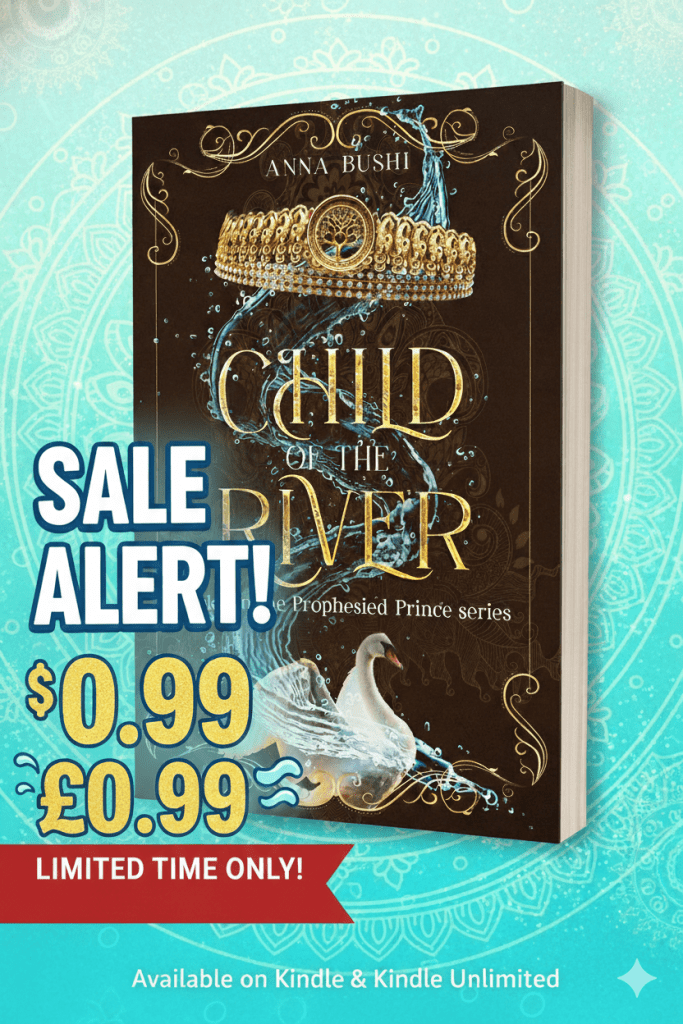
On Sale for $0.99/£0.99

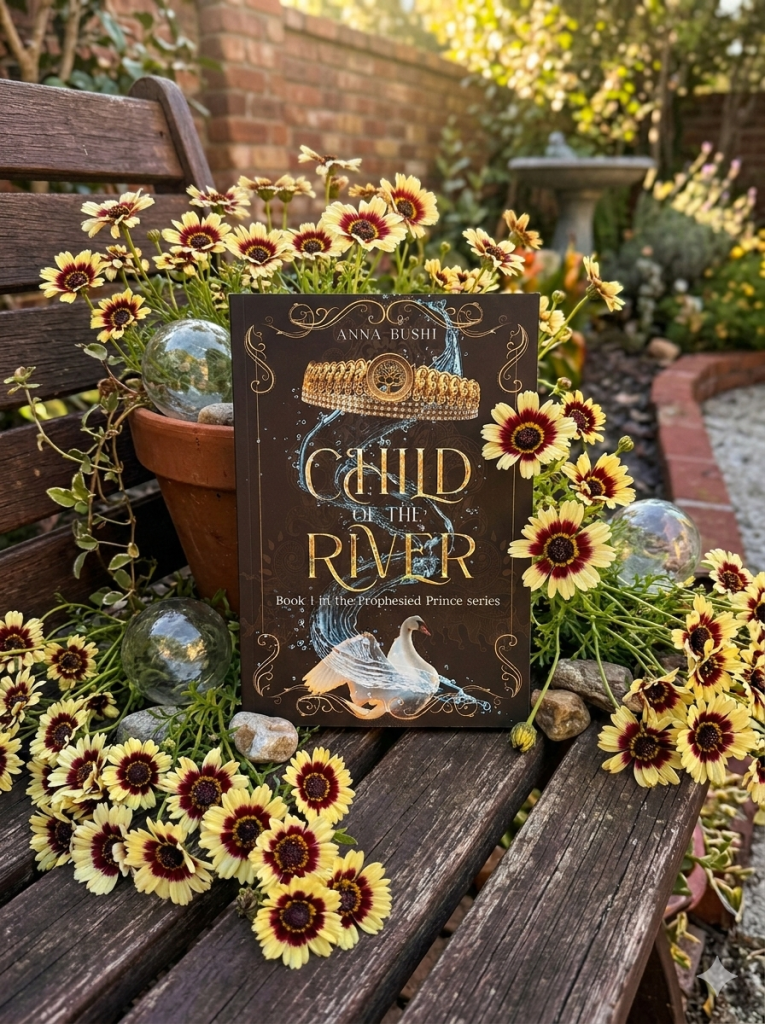
Child of the River Cover

🌊 A curse. A death. A prophecy begins.

On a storm-lashed shore, young Sugandha watches her grandfather call upon the god of fire to curse a ship of enemies. The sea roars, the sand trembles—and when the ritual ends, her grandfather lies motionless.

That night, he opens his eyes one last time.

“I have enough life force left to offer you a blessing… Conceal her from Ori. Your uncle poses a grave danger to your very existence.”

As the bells of her uncle’s cart echo in the distance, Sugandha flees the only home she has ever known—her journey entwined with a dying man’s curse and a prophecy that will shape the fate of kings.

⚔️ Child of the River — Book One of the Prophesied Prince Trilogy — is a sweeping medieval fantasy inspired by ancient India, filled with curses, rival kingdoms, and a destiny born of the river’s depths.

📖 On Sale for $0.99/£0.99
https://annabushi.com/books/prophesied-prince-series/

Enter the prophecy before it consumes them all.

Back to Kashgar: Legacy, Magic, and New Dangers

Book Two of the Prophesied Prince series is inching toward 50,000 words! In the latest chapters, we encounter descendants of characters from my Land of Magadha trilogy—members of the Malla army who came to Kashgar with Atul. Writing those scenes felt like coming home. After ten years in the world of Magadha, revisiting its legacy through new generations has been deeply satisfying.

Meanwhile, Sugandha is beginning to uncover the truth about her family and her powers. Something tells me she won’t be happy with what she learns.

Magical creatures continue to hunt our protagonists—but as always, the real danger lies in human heart.

Here is a snippet from Chapter two written in Atul’s POV:

“The rumor of your death has reached our ranks. The commander… he neither confirmed nor denied it. Instead, he told us—your five guards—to find you.”

I nodded. “Clever of him. That gives you a reason to follow me north.” I kept my voice steady, calm, though the thought of the others—young men who had followed me across the sea—believing I had fallen before even drawing my sword unsettled me. Still, I had to trust the commander. Trust that he’d keep them loyal without revealing the truth. That I was alive. For now.

If you haven’t yet read Child of the River (Book One), now’s the perfect time. The audiobook, narrated by two incredible voice actors, brings Kashgar vividly to life. Book Two is slated for release in 2026.