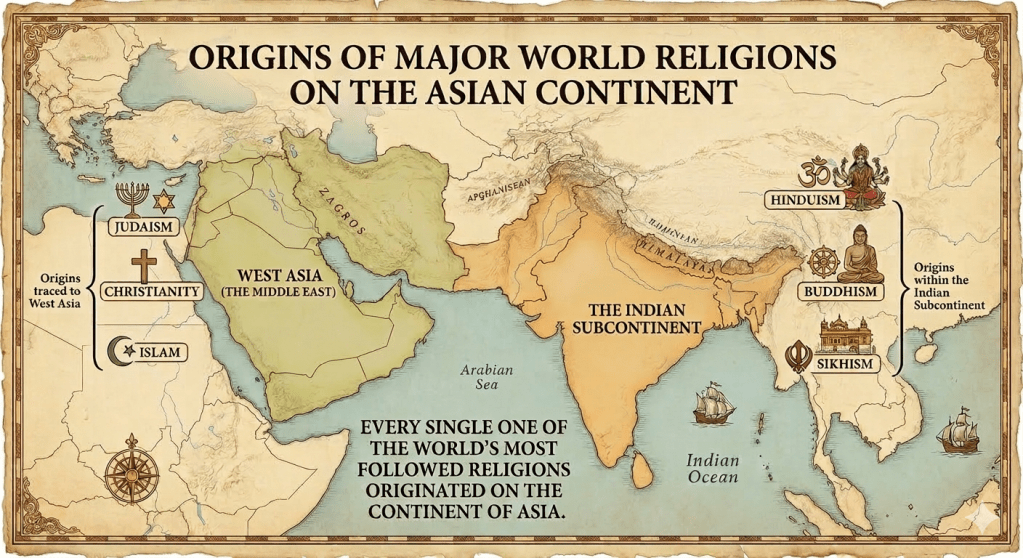
As an author of fiction set in medieval India, I’m constantly fascinated by the spiritual geography of our world. Of the major religions practiced today, three originated right in the Indian Subcontinent: Hinduism, Buddhism, and Sikhism. Every single one of the world’s most followed religions originated on the continent of Asia.
I often sit in my chair and wonder what this world felt like two millennia ago, when these ideas were first catching fire. In my upcoming book, Curse of the River, Buddhist monks, Vedic priests, and Hindu mythology do play a significant role.
And I’d love to know: If you could travel back two thousand years to witness the birth of a single idea or belief, where would you want to land?
Coffee in the morning and chai in the afternoon is fueling my writing and editing spree as I get across the finish line. When I started working on the Prophesied Princeseries, I decided to use more authentic medieval Indian names. Half my editing time now goes into wondering if a place was called Jalpaiguri or Jaipaiguri and opening my glossary for the 100th time. The joys of writing are many!
Other than that, my editing of Curse of the River is moving steadily, and I cannot wait to get this sequel into your hands.
I recently heard back from my beta readers, and their reactions have been everything I hoped for.
One reader shared:
“Wow! That was a sad but powerful ending to the book! OK, I can’t wait for the conclusion. Really enjoyed this book.”
Another was caught off guard by the final pages:
“Wow!!! The story ends with a cliffhanger for both main characters, but the epilogue! That is quite stark and surprising. I very much look forward to seeing where you take us in book three.”
To give you a sense of the tension and emotional depth my beta readers are describing, here is an excerpt from Curse of the River:
Chapter 1 – SugandhaSpring Year 2
For most of that first day on the river, Prince Atul rowed like a man expecting trouble. His gaze swept the banks, searching for signs of pursuit. Whenever he spotted someone, too far from us to tell if they were fishermen or travelers, he quieted his strokes and steered us farther from shore.
Sweat glazed his muscles as he rowed with the strength of three men. Suddenly, his head snapped toward a thicket of trees by the water’s edge; his eyes were sharp and his jaw set. He looked like a hunter watching for movement. I studied him in that moment, still unsure if I had been brave or foolish to ask him to come.
“Crouch,” he whispered, in the kind of voice that expected to be obeyed. He folded in on himself, head tucked to his knees. I stayed upright, eyes sweeping the landscape for whatever had rattled him, until his hand pressed down on my head and forced me lower.
“With instincts like yours, how did you survive this long?” he murmured, a grin tugging at his mouth.
“By not trusting strangers,” I shot back, though I stayed crouched. My brush with the nagas had made me bolder, yes; but I was not foolish enough to believe a divine rescue would come every time I found myself in trouble.
Welcome back to the banks of the river, travelers. If you are just joining us, you’ll want to start at the very beginning. You can find my notes for the Prologue through Chapter 10 right here.
And of course, it is much more fun if you have the story in your hands (or your ears!). If you haven’t yet, you can grab the book here or listen to it on Audible.
Spoiler Warning
We are diving deep into the heart of the story today. If you aren’t caught up through Chapter 20, proceed with caution!
Chapter 11: Crocodiles and Unwanted Affections
In Chapter 11, Sugandha learns a hard lesson: being a hero is exhausting. There is truly no better way to discover the limits of your own magic than while fighting for your life against a crocodile.
But the real “plight” for our protagonist isn’t just the giant, prehistoric beast. It’s the unwanted attention that comes afterward. Because she is disguised as a boy, she earns the admiration of a young woman who starts eyeing her as a future husband. In that moment, can you really blame Sugandha for wishing the crocodile had just finished the job?
No such luck for her, though. I have plenty more ordeals waiting around the bend.
The Cost of Deception
One of my favorite things to explore is the psychological toll of a lie. Sugandha is living as a boy, learning the grueling, beautiful art of swordmaking. These chapters give her a brief respite, a moment of “normal” work, but the guilt is starting to rot.
Her emotions are a mess. She feels terrible for deceiving Parimala, yet she aches for the life she left behind. I wanted to capture that specific longing a girl feels when she has not worn a dress or makeup or jewels in ages. In this medieval world, it is craving for Kajal under her eyes and the scent of jasmine flowers woven into her hair. Every deception runs its course eventually, and Sugandha is beginning to realize that her safety is a very fragile thing.
A Childhood Memory: The Magic of Ghee
Food is the soul of my stories. In this chapter, Sugandha is served extra ghee over her white rice, and writing that took me straight back to my own childhood.
Ghee originated in India over three thousand years ago. In that hot climate, butter would go rancid almost instantly. By heating it to remove the water and milk solids, our ancestors created “ghrita” (Sanskrit for clarified butter), a fat with a long shelf life and a heavenly scent.
Beyond the kitchen, ghee became sacred. It is the purest offering to the gods, used in yagnas (fire rituals) to carry prayers to the heavens.
Favorite Line: > “I felt like I climbed a giant ladder whose rungs shattered with each step I took.”
Read the rest of the behind the scenes of Sugandha’s deception, Atul’s insecurity, and the ancient Tamil ethics that guide my writing on my Substack.
Hello, fellow time travelers! I am so excited to kick off this journey with you. There is something uniquely terrifying and thrilling about opening up the pages of a world I’ve built and saying, “Take off your shoes and come on in.”
If you’ve been following my work, you know Prophesied Prince trilogy is a spin off of my Land of Magadha trilogy. If you’re new here—welcome to the family! Child of the River is where we start a brand new chapter together.
Before we dive into the secrets of the river, a few house rules:
⚠️ A Fair Warning
This post contains spoilers for the prologue and the first ten chapters. If you haven’t grabbed your copy of Child of the River yet, consider this your sign to go get it, find a cozy corner, and catch up so we can chat about it together.
🎨 A Note on History vs. Heart
While I strive to honor the vibrant textures of Indian culture, customs, and (most importantly) food, please remember that I am an author of fiction, not a historian. I’ve taken plenty of artistic liberties to make the magic and the world feel real. To the historians out there: I beg your forgiveness!
Why You Can’t Skip This Prologue
I know, I know. Some of you are “Prologue Skippers.” You want to get straight to Chapter One. Don’t do it. Not only does this Prologue set the stage for everything Sugandha is about to face, but it’s the secret bridge between worlds. For those who have read my Land of Magadhatrilogy, what happens here explains exactly what that mysterious ship was doing at the end of Burden of the Crown.
Read the rest of the secrets and see the historical inspirations on my Substack.
If you haven’t yet stepped into the world of the Prophesied Prince, now is the perfect time. To celebrate the upcoming sequel, Child of the River (Book One) is currently on sale for just $0.99 / £0.99 in the US and UK.
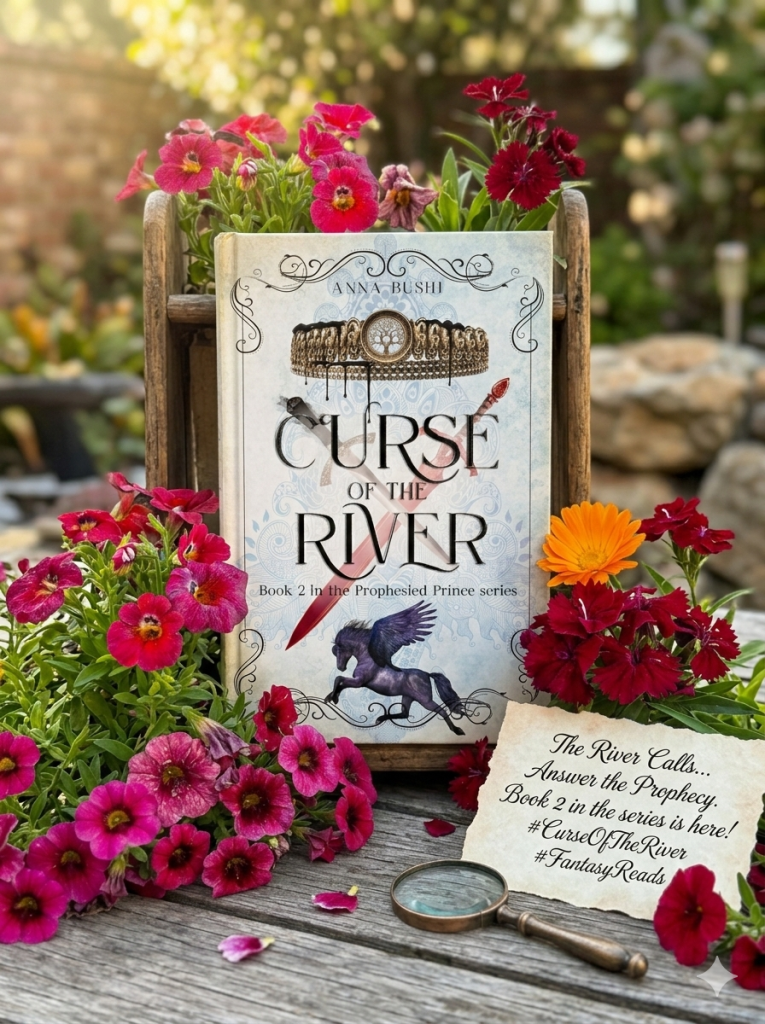
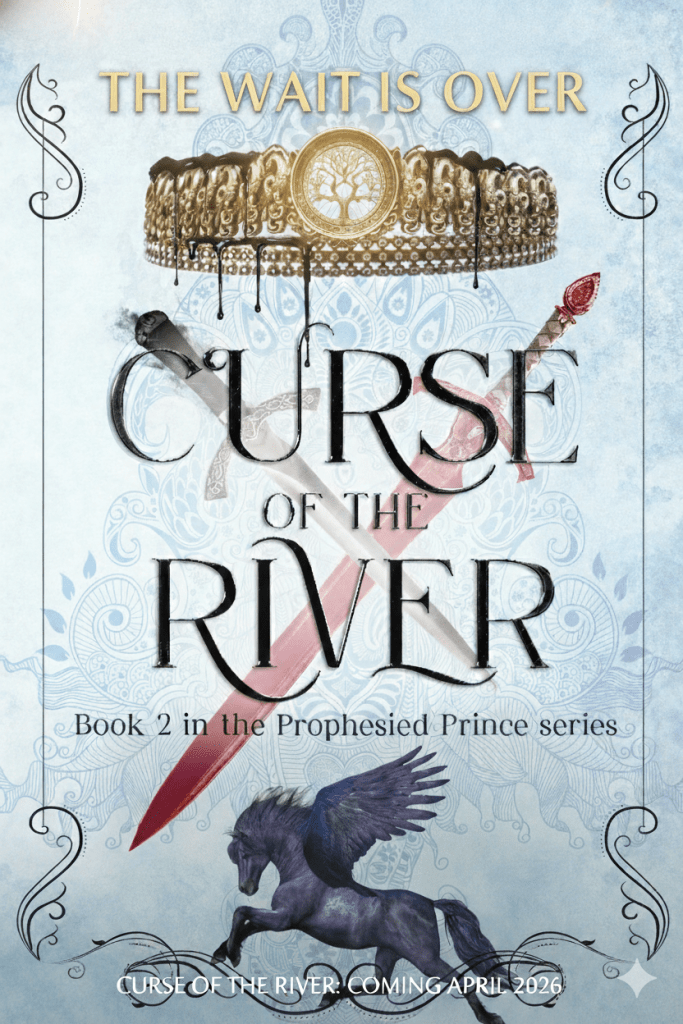
I am absolutely delighted to finally reveal the cover of my upcoming novel, Curse of the River, the second installment in the Prophesied Prince trilogy.
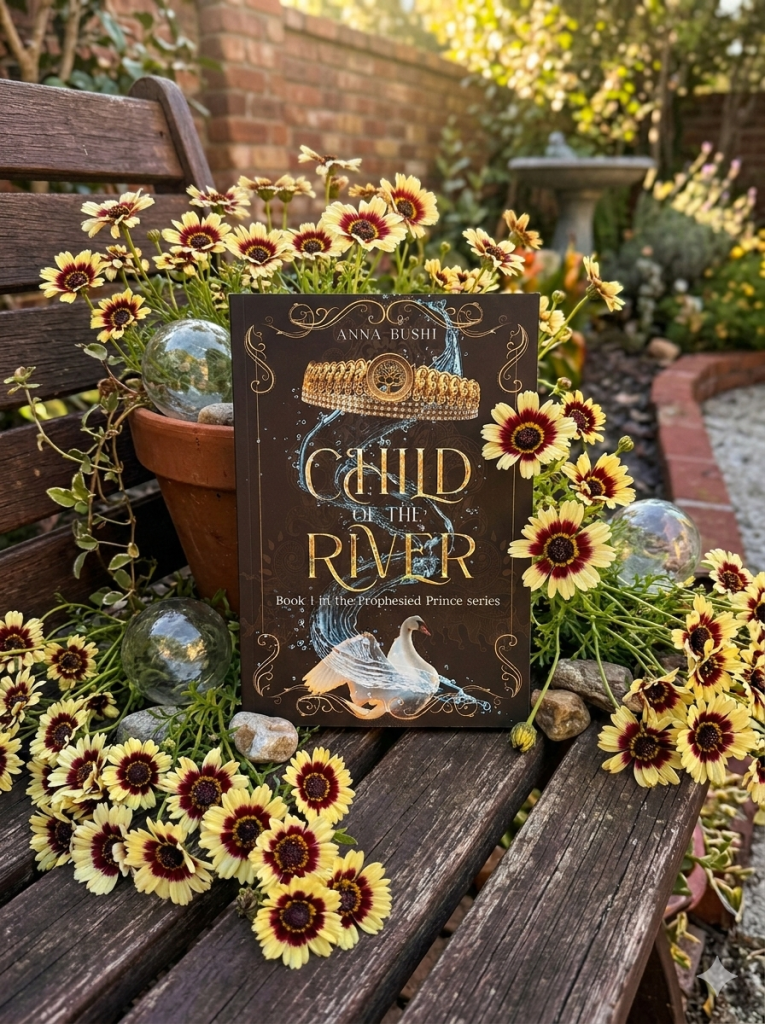
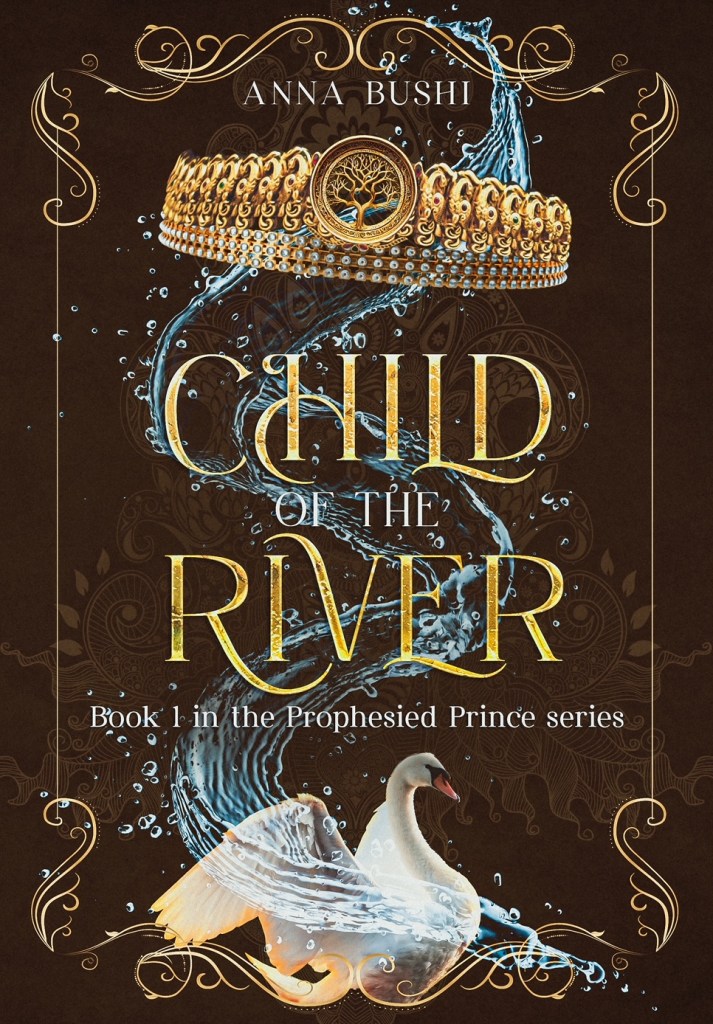
This cover has quickly become one of my favorites. To keep the visual thread tied to the first book, Child of the River, I have returned to the imagery of the crown of Kashgar. However, as the story evolves, so does the symbol of its power.
What to Look For:
A Muted Legacy: While the first cover featured a crown surrounded by cascading water, this crown is a much muted gold.
Darker Omens: You’ll notice something dark dripping from the crown—a nod to the fact that this sequel is a significantly darker journey than the first.
New Symbols: Instead of the swan, we have introduced a winged horse. This rakshasa (demon or monster) and other mythical ones play a pivotal role in the story, and I can’t wait for you to encounter them.
The Blades: In the center, you’ll see two blades crossing. They hold significance to the difficult path Prince Atul and Sugandha must walk together.
This cover perfectly captures the heart of this book and the growing danger lurking in the lands of Kashgar. Let me know in the comments what you think about this cover.
Eighty-three thousand words in, the story finally learned how to stand on its own—and then promptly broke my heart.
This book has been living in my head for a long time, but writing it still surprised me. One of the unexpected joys was returning to familiar ground. A few characters with ties to The Land of Magadha slipped into this story, and weaving those threads back to my very first series felt deeply satisfying. It reminded me that these worlds are still alive—that time has passed, but nothing is ever truly left behind.
At the center of Curse of the River are two protagonists thrown together whether they like it or not. They spend a lot of time irritating each other, challenging each other, and—very reluctantly—learning from one another. Writing their interactions became one of my favorite parts of the book. Their conversations are sharp, sometimes petty, often restrained, and always revealing. They don’t grow through grand declarations, but through friction.
Rakshasas—shape-shifting demons from Hindu mythology—make several appearances, and they are anything but gentle. Their presence pulls the story into darker territory, putting our protagonists in real, mortal danger. They’re clever, cruel, and deeply unsettling, and I loved letting them haunt the edges of the narrative.
But the heart of this book belongs to Sugandha.
As she begins to understand where she comes from—and what that truth costs—the story itself changed shape. Some answers can’t be uncovered without loss, and some truths leave scars. Walking Sugandha toward that realization was both exhilarating and devastating.
And then there’s the ending.
I won’t say much, except this: writing it broke my heart into many pieces. It felt inevitable and earned—and still cruel. The kind of ending that stays with you long after the final line.
As I move into revisions, I’m holding tightly to what made this draft special: the echoes of older worlds, the sharp companionship at its center, the danger hiding behind every transformation, and the emotional price of truth.
More soon. For now, I’m letting the river run where it will.
Sugandha is the quiet heartbeat of the Prophesied Prince trilogy. I’m deep in Book Two right now, so I’m living in her world every day—and she’s definitely taken up long-term residence in my head.
When we first meet her in Child of the River, she’s grieving the loss of the only family she’s ever known: her grandfather.
“Sorrow and grief filled my heart when I realized I would receive no more guidance from my grandfather. I had never known my parents, and my grandfather had raised me from birth.
Usually, I would stir into wakefulness at this time of day. From my cot, I would hear my grandfather in the kitchen, pulling down pots, grinding an array of herbs, and brewing them.
Those small sounds would bring me peace, and I would snuggle into my sheets and close my eyes… He would grin at me as if I brightened his day just by existing, his wrinkled face glowing.”
One of my favorite chapters featuring her is Chapter 31 (Summer, Year 1). There’s a certain innocence to Sugandha there—one that still survives even as she’s fighting for her life. She stumbles through chaos guided only by instinct and heart, doing what she believes is right, even when she has no idea what’s really happening around her. That combination of bravery and bewilderment is exactly what makes her so compelling to write.
Book Two lets me deepen her dynamic with Atul. These two couldn’t be more different—each carrying their own scars, their own expectations, their own definitions of who they should be. Watching them learn to trust each other, challenge each other, and sometimes collide spectacularly has been one of the joys of drafting this book. This moment between them is from earlier in book two:
“Look at me,” I said, and her eyes fluttered open.
“Imagine what it would mean to master that power,” I said, my voice low. I let the oars still in my hands.
She clenched her jaw, then closed her eyes again. Her breath evened out, arms stretching forward as if reaching for something unseen. I waited. But the river stayed calm.
Then she gasped—clutching her throat like something had seized it—and coughed, harsh and broken.
“Nanda—”
“No.” Her voice came between sobs, ragged and raw. “Stop. You think you understand what it’s like—to carry this wild, flickering thing inside me—but you don’t. You can’t.”
This trilogy is, at its core, a coming-of-age story. Through Sugandha, I wanted to portray a deeply human young woman—strong yet unsure, resilient yet overwhelmed, someone whose magic feels as dangerous as it is wondrous. Her journey isn’t neat or easy, and it mirrors the hardships a girl on the run would face in a world shaped by myth, patriarchy, and the weight of expectations. These are truths often left unexplored in traditional Indian mythology, and Sugandha gives me the space to write into those gaps.
She grows slowly. She stumbles often. But she keeps trying. And that, to me, is what makes her unforgettable.
I feared that the men who revered me as the Heir to Malla would abandon me if they knew the truth about my birth. That was the reason I had urged my uncle, King Jay of Malla, to send me on this mission. Uncle Jay wanted me to wait until our soldiers had secured Kashgar, but I itched to prove myself.
Atul’s journey in Child of the Riveris a tangle of identity, duty, and the quiet ache of wanting to be enough. When his ships crossed the Nira Sea, he didn’t just bring soldiers—he carried the weight of his own questions about who he is… and who he desperately hopes to become.
One of my favorite moments to write is his exchange with the fake prince in Chapter 26 (Spring, Year 2). Those scenes crack Atul open a bit. The fake prince’s doubts mirror Atul’s own, and you see him slide into that big-brother role so naturally—steady, protective, and sometimes wiser than he realizes. And then, just as quickly, he’s unmistakably a teenager again: impulsive, earnest, and brave in ways that don’t always make sense but feel undeniably true.
Being Meera’s son (yes, that Meera from the Land of Magadha trilogy) gives me a chance to explore the complicated corners of his heart—respect tangled with resentment, admiration overshadowed by old hurt. His mother’s secrets shaped him, and in many ways, he’s still deciding what parts of that legacy he wants to claim.
Through Atul, I get to return to one of my favorite questions: What truly makes a good ruler? Birthright? Choice? Sacrifice? Something quieter and harder to name?
Atul doesn’t have the answers yet—but he’s determined to earn them.
On a storm-lashed shore, young Sugandha watches her grandfather call upon the god of fire to curse a ship of enemies. The sea roars, the sand trembles—and when the ritual ends, her grandfather lies motionless.
That night, he opens his eyes one last time.
“I have enough life force left to offer you a blessing… Conceal her from Ori. Your uncle poses a grave danger to your very existence.”
As the bells of her uncle’s cart echo in the distance, Sugandha flees the only home she has ever known—her journey entwined with a dying man’s curse and a prophecy that will shape the fate of kings.
⚔️ Child of the River — Book One of the Prophesied Prince Trilogy — is a sweeping medieval fantasy inspired by ancient India, filled with curses, rival kingdoms, and a destiny born of the river’s depths.



 Anna Bushi