One of my favorite dishes to make on a cold or rainy day is Rasam. Rasam in Tamil means juice, extract, or essence. Rasa in Sanskrit has a similar meaning. Many South Indian languages also call this dish Saaru (juice).
If you google rasam recipes, you will find variations with tomatoes. But for an authentic medieval Indian rasam, you skip the tomatoes and chilies (which didn’t arrive in India until much later). Instead, use: tamarind, cumin, coriander, toor dal, curry leaves, ghee, ginger, and the true star of the era, black pepper.
It is interesting to note that tomatoes originally grew in the Andean region of South America. After being brought to India by Portuguese traders, they were adopted so widely that they now appear in many traditional cuisines. The same is true for chilies, another produce from the Americas that has become a staple of Indian cooking.
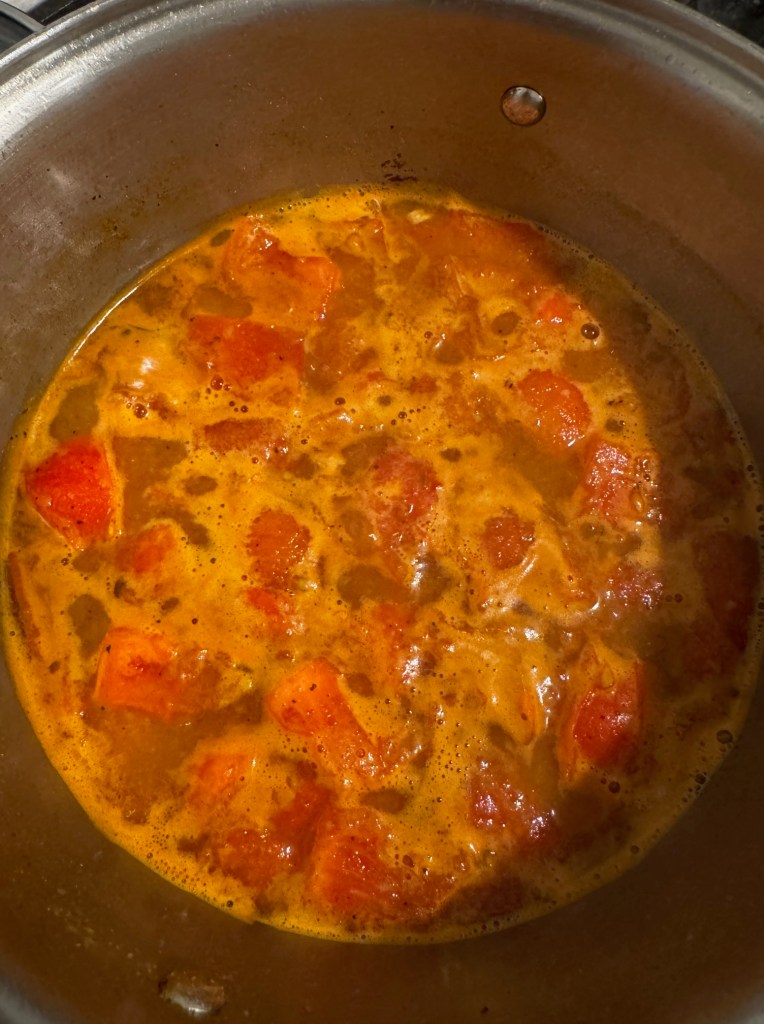
Pictured below is a boiling pot of rasam I made recently with tomatoes, before I garnished it with chopped cilantro.
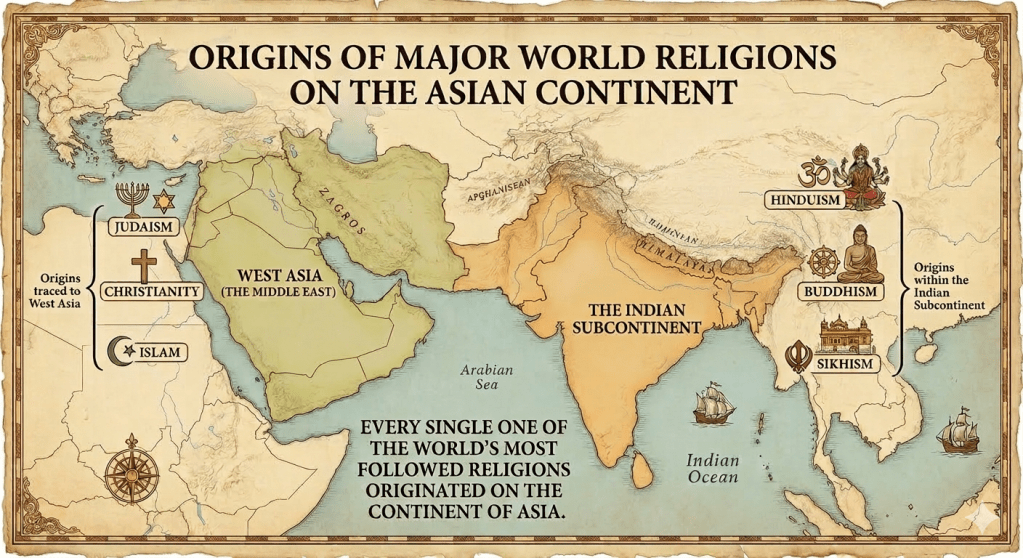
As an author of fiction set in medieval India, I’m constantly fascinated by the spiritual geography of our world. Of the major religions practiced today, three originated right in the Indian Subcontinent: Hinduism, Buddhism, and Sikhism. Every single one of the world’s most followed religions originated on the continent of Asia.
I often sit in my chair and wonder what this world felt like two millennia ago, when these ideas were first catching fire. In my upcoming book, Curse of the River, Buddhist monks, Vedic priests, and Hindu mythology do play a significant role.
And I’d love to know: If you could travel back two thousand years to witness the birth of a single idea or belief, where would you want to land?
In one of the Harry Potter books, Hermione tells Ron that he has the “emotional range of a teaspoon.” In those books, it makes sense for a fourteen-year-old girl to say that to a boy she has a secret crush on.
In the real world, however, I find men to have the same emotional range as women, even if they express it differently. If you have read any books by Anthony Doerr or Fredrik Backman, you would likely agree that some men can express themselves quite exquisitely.
All my books feature both male and female POVs, and my men are not emotionally stunted. I take great joy in writing them:
Prince Jay (Land of Magadha): An heir who grows into his role and falls for a girl who challenges him.
King Dushyant (King in Hiding): A man on a mission to find his father’s murderer who realizes love is worth fighting for.
Prince Giridhar (Prince in Exile): A playwright more comfortable with a book than a blade.
Prince Atul (Prophesied Prince): My protagonist who thinks himself unworthy, yet must protect his kingdom.
Rish Vindhya: My own “book crush.” Fiercely loyal and deeply aware of the woman he loves.
One of the themes I constantly return to, whether I’m writing romance or fantasy, is the question: What truly makes a good ruler?
In my daily life, I’ve always been fascinated by government and policy. In my writing, I find that medieval India provides the perfect “laboratory” to explore these ideas. Setting my stories in this era—specifically emulating the rich culture and laws of the 9th to 11th centuries—allows me to examine leadership and the “human heart in conflict” without the interference of modern political biases.
Medieval India possessed such complex layers of governance that it creates a fantastic playing field for my characters. This is why my protagonists are often of royal blood; it places them at the intersection of love, duty, and the ultimate test of character. I love placing these characters in difficult situations to see how they learn to survive and lead, even when their own power is fragile.
For me, a great leader must be able to sacrifice their own desires for the good of the kingdom. We see this struggle throughout the Prophesied Princetrilogy as Prince Atul grapples with his identity and the weight of his future. He follows in the footsteps of his mother, Meera, from the Land of Magadhaseries, who had to choose between her heart and her land.
I’d love to hear from you: If you could choose just one quality for a leader to have, what would it be? Leave a comment and let’s discuss!
As an author, I am constantly living in the minds of my characters, but sometimes the modern world breaks through with a fascinating bit of trivia. The other day, I heard a segment on the radio about the term “Hat Trick.”
Coming from a background where I appreciate the nuances of cricket, I’ve always known it as that rare, celebrated phenomenon where a bowler takes three consecutive wickets. But I never knew the literal origin! Apparently, in 19th-century England, a bowler who achieved this feat was actually presented with a new hat bought by his club. It’s a bit funny to imagine, considering cricketers usually wear caps, yet the tradition demanded a proper hat. There is no hat given to cricketers in modern day games but they are well compensated by other means.
Even more interesting? The tradition migrated to Ice Hockey. When a player scores three goals, spectators throw their beanies and headgear onto the rink in celebration. While “hat tricks” and ice rinks are completely useless for medieval Indian fiction, I enjoy learning the history of words and it helps me understand how traditions evolve—much like how I enjoy exploring the ancient customs of the Swayamvara in my romance series.
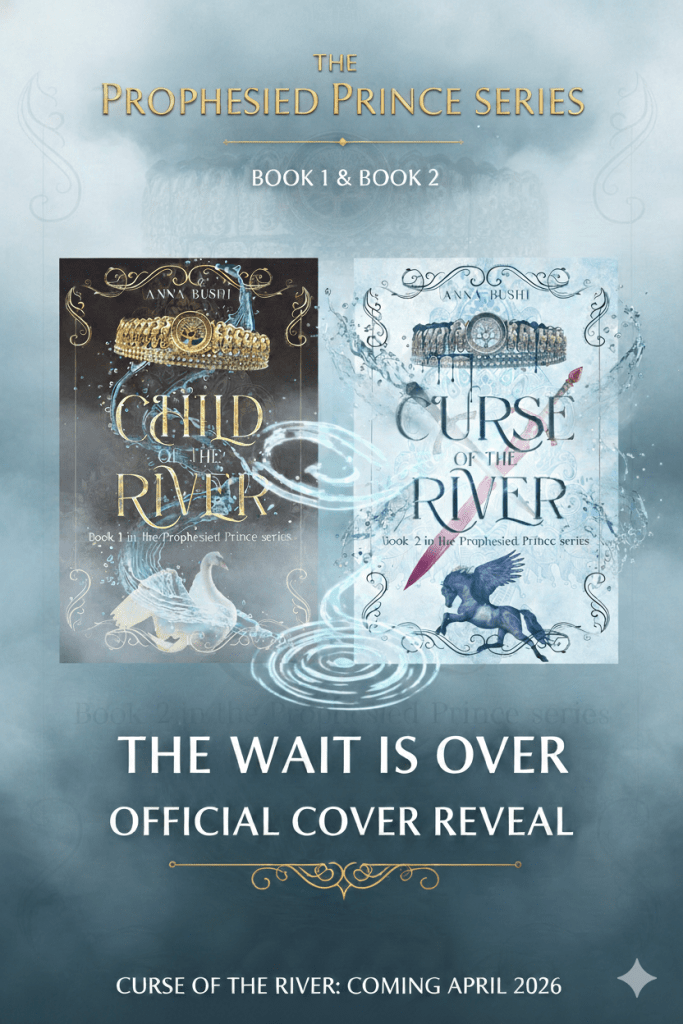
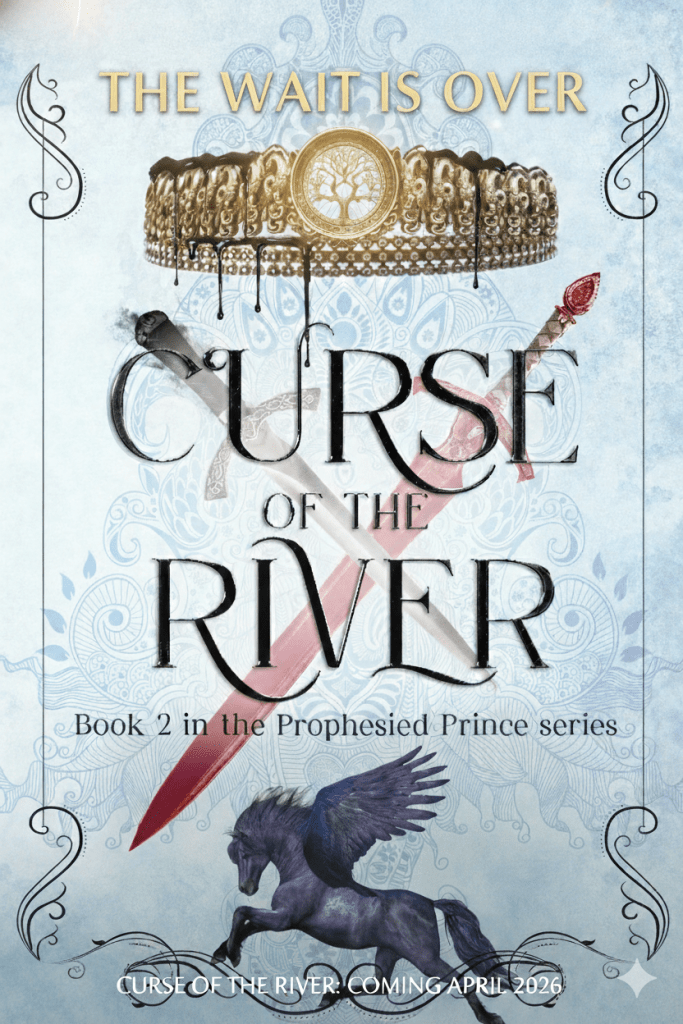
I am absolutely delighted to finally reveal the cover of my upcoming novel, Curse of the River, the second installment in the Prophesied Prince trilogy.
This cover has quickly become one of my favorites. To keep the visual thread tied to the first book, Child of the River, I have returned to the imagery of the crown of Kashgar. However, as the story evolves, so does the symbol of its power.
What to Look For:
A Muted Legacy: While the first cover featured a crown surrounded by cascading water, this crown is a much muted gold.
Darker Omens: You’ll notice something dark dripping from the crown—a nod to the fact that this sequel is a significantly darker journey than the first.
New Symbols: Instead of the swan, we have introduced a winged horse. This rakshasa (demon or monster) and other mythical ones play a pivotal role in the story, and I can’t wait for you to encounter them.
The Blades: In the center, you’ll see two blades crossing. They hold significance to the difficult path Prince Atul and Sugandha must walk together.
This cover perfectly captures the heart of this book and the growing danger lurking in the lands of Kashgar. Let me know in the comments what you think about this cover.
One of the greatest joys of being part of the author community is coming together to share our worlds with you. I’ve joined forces with several other writers to group our stories into themed collections, making it easy for you to find your next great read.
Since many of you are following along as I prepare for the launch of Curse of the River in April 2026, these collections are a perfect way to catch up on my previous works at a great value.
✨ Sci-Fi & Fantasy in Kindle UnlimitedChild of the River (Book One of the Prophesied Prince Trilogy) is currently featured in this massive collection of otherworldly tales. If you are a Kindle Unlimited subscriber, you can dive into the world of Kashgar right now!
Act Fast: This promotion ends March 16, 2026.
📜 Historical Fiction: Kindle Unlimited February Edition If you want the full epic experience, the entire Land of Magadha trilogy ebook boxset is featured here. Follow the Malla siblings, Princess Meera and Prince Jay, through three decades of royal secrets and shattered hearts.
Act Fast: This promotion ends March 6, 2026.
🥀 Historical & Literary Fiction Lovers For those who appreciate the lyrical side of historical storytelling, the Land of Magadha ebook boxset is also part of this specially curated group. It is the perfect companion for readers who love exploring the human heart in conflict within medieval India.
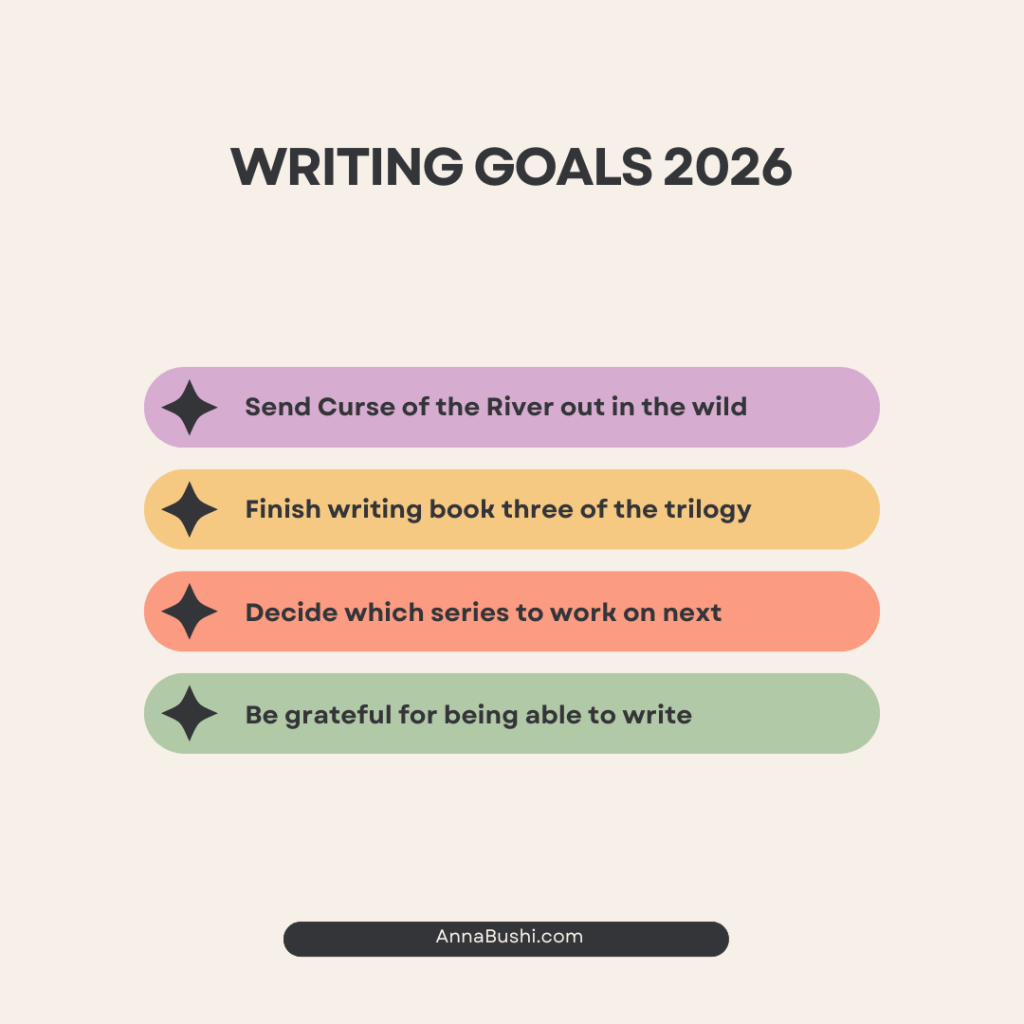
As I look toward 2026, my writing path feels both clear and a little daunting—in the best possible way. My primary goal is to publish Curse of the River, Book Two of the Prophesied Prince trilogy, and then keep my momentum going straight into writing Book Three, the conclusion of Sugandha and Atul’s journey.
This trilogy has always been a coming-of-age story at its heart—about power that is inherited, power that is chosen, and the cost of both. I’ve been planting seeds for the ending since Book One, even when I didn’t fully understand what they would grow into. Now, as I write deeper into Book Two, I can see the shape of the finale forming on the horizon.
I know this much: the ending will be bittersweet. How much bitter and how much sweet? Even I don’t know yet. My characters certainly don’t. They’re still making choices, still stumbling, still hoping. And I’m following them, page by page, trusting that the story will reveal exactly the ending it demands—whether it breaks my heart a little in the process or not.
What I do know is that I want to give this world, these characters, and you—the readers who’ve walked this road with me—the most honest ending I can write. One that lingers. One that feels earned.
Here’s to a year of rivers that refuse to stay calm, prophecies that don’t behave, and stories that insist on being told.
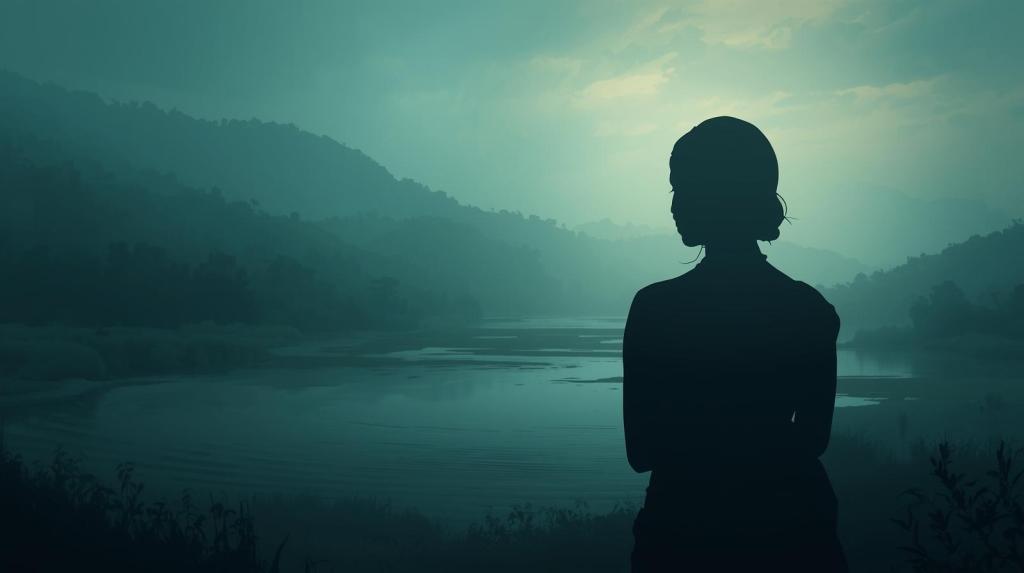
Sugandha is the quiet heartbeat of the Prophesied Prince trilogy. I’m deep in Book Two right now, so I’m living in her world every day—and she’s definitely taken up long-term residence in my head.
When we first meet her in Child of the River, she’s grieving the loss of the only family she’s ever known: her grandfather.
“Sorrow and grief filled my heart when I realized I would receive no more guidance from my grandfather. I had never known my parents, and my grandfather had raised me from birth.
Usually, I would stir into wakefulness at this time of day. From my cot, I would hear my grandfather in the kitchen, pulling down pots, grinding an array of herbs, and brewing them.
Those small sounds would bring me peace, and I would snuggle into my sheets and close my eyes… He would grin at me as if I brightened his day just by existing, his wrinkled face glowing.”
One of my favorite chapters featuring her is Chapter 31 (Summer, Year 1). There’s a certain innocence to Sugandha there—one that still survives even as she’s fighting for her life. She stumbles through chaos guided only by instinct and heart, doing what she believes is right, even when she has no idea what’s really happening around her. That combination of bravery and bewilderment is exactly what makes her so compelling to write.
Book Two lets me deepen her dynamic with Atul. These two couldn’t be more different—each carrying their own scars, their own expectations, their own definitions of who they should be. Watching them learn to trust each other, challenge each other, and sometimes collide spectacularly has been one of the joys of drafting this book. This moment between them is from earlier in book two:
“Look at me,” I said, and her eyes fluttered open.
“Imagine what it would mean to master that power,” I said, my voice low. I let the oars still in my hands.
She clenched her jaw, then closed her eyes again. Her breath evened out, arms stretching forward as if reaching for something unseen. I waited. But the river stayed calm.
Then she gasped—clutching her throat like something had seized it—and coughed, harsh and broken.
“Nanda—”
“No.” Her voice came between sobs, ragged and raw. “Stop. You think you understand what it’s like—to carry this wild, flickering thing inside me—but you don’t. You can’t.”
This trilogy is, at its core, a coming-of-age story. Through Sugandha, I wanted to portray a deeply human young woman—strong yet unsure, resilient yet overwhelmed, someone whose magic feels as dangerous as it is wondrous. Her journey isn’t neat or easy, and it mirrors the hardships a girl on the run would face in a world shaped by myth, patriarchy, and the weight of expectations. These are truths often left unexplored in traditional Indian mythology, and Sugandha gives me the space to write into those gaps.
She grows slowly. She stumbles often. But she keeps trying. And that, to me, is what makes her unforgettable.





 Anna Bushi