The River’s Toll: Beta reader reveals

Coffee in the morning and chai in the afternoon is fueling my writing and editing spree as I get across the finish line. When I started working on the Prophesied Princeseries, I decided to use more authentic medieval Indian names. Half my editing time now goes into wondering if a place was called Jalpaiguri or Jaipaiguri and opening my glossary for the 100th time. The joys of writing are many!
Other than that, my editing of Curse of the River is moving steadily, and I cannot wait to get this sequel into your hands. 

I recently heard back from my beta readers, and their reactions have been everything I hoped for. 

One reader shared:

“Wow! That was a sad but powerful ending to the book! OK, I can’t wait for the conclusion. Really enjoyed this book.”

Another was caught off guard by the final pages:

“Wow!!! The story ends with a cliffhanger for both main characters, but the epilogue! That is quite stark and surprising. I very much look forward to seeing where you take us in book three.”

Preorder Curse of the River Here

A Glimpse into the Journey

To give you a sense of the tension and emotional depth my beta readers are describing, here is an excerpt from Curse of the River:

Chapter 1 – Sugandha Spring Year 2

For most of that first day on the river, Prince Atul rowed like a man expecting trouble. His gaze swept the banks, searching for signs of pursuit. Whenever he spotted someone, too far from us to tell if they were fishermen or travelers, he quieted his strokes and steered us farther from shore.

Sweat glazed his muscles as he rowed with the strength of three men. Suddenly, his head snapped toward a thicket of trees by the water’s edge; his eyes were sharp and his jaw set. He looked like a hunter watching for movement. I studied him in that moment, still unsure if I had been brave or foolish to ask him to come.

“Crouch,” he whispered, in the kind of voice that expected to be obeyed. He folded in on himself, head tucked to his knees. I stayed upright, eyes sweeping the landscape for whatever had rattled him, until his hand pressed down on my head and forced me lower.

“With instincts like yours, how did you survive this long?” he murmured, a grin tugging at his mouth.

“By not trusting strangers,” I shot back, though I stayed crouched. My brush with the nagas had made me bolder, yes; but I was not foolish enough to believe a divine rescue would come every time I found myself in trouble.

Read the full excerpt at annabushi.com.

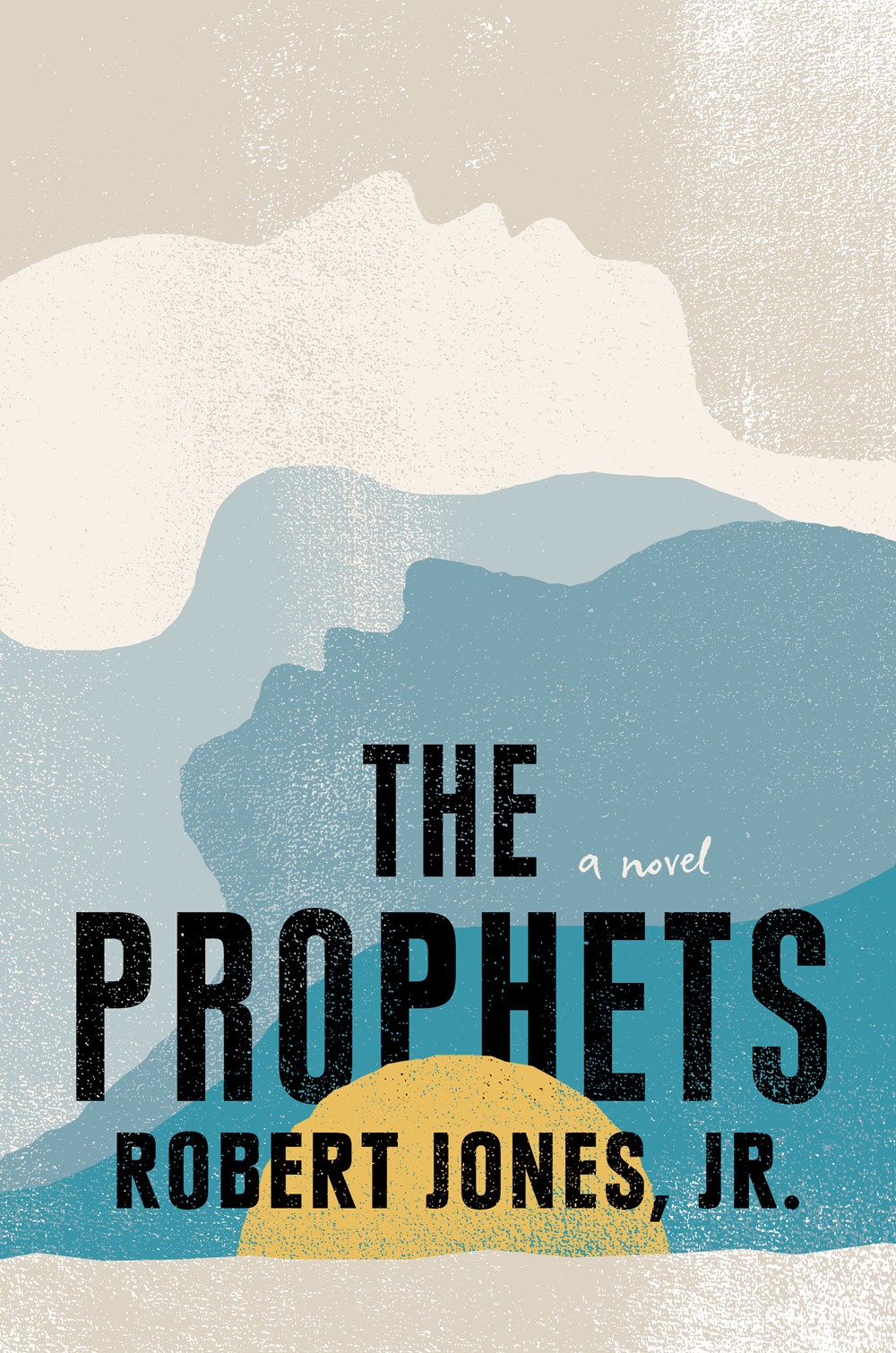
Review: The Prophets by Robert Jones Jr.

This is, at its heart, a love story between two young people. That they are two men is almost beside the point; their love gives those around them hope that such comfort could exist in such an “Empty” place. The story is set on a plantation called Empty in the American South, following both the enslaved people and those who claimed to own them.

Every character is multi-faceted and feels like a real human being, a bit of good, a bit of bad, and a whole lot of complex feelings. Most chapters are narrated by a different character, and it is amazing how the author uses only his words to paint such brilliant portraits. As I read, I felt as if I were standing on a forest floor with grass under my feet and oppressive heat coating my skin, longing for rain.

The chapters set in Africa were my personal favorite; I found myself wanting to learn even more about the cultures, customs, and stories of that time. And that ending—it truly has to be experienced. This book is a powerful example of how we all have stories within us that only we can tell. A brilliant debut novel.

The River Chronicles: Chapters 11–20 (Crocodiles, Curses, and the Scent of Ghee)

Welcome back to the banks of the river, travelers. If you are just joining us, you’ll want to start at the very beginning. You can find my notes for the Prologue through Chapter 10 right here.

And of course, it is much more fun if you have the story in your hands (or your ears!). If you haven’t yet, you can grab the book here or listen to it on Audible.


Spoiler Warning

We are diving deep into the heart of the story today. If you aren’t caught up through Chapter 20, proceed with caution!

Chapter 11: Crocodiles and Unwanted Affections

In Chapter 11, Sugandha learns a hard lesson: being a hero is exhausting. There is truly no better way to discover the limits of your own magic than while fighting for your life against a crocodile.

But the real “plight” for our protagonist isn’t just the giant, prehistoric beast. It’s the unwanted attention that comes afterward. Because she is disguised as a boy, she earns the admiration of a young woman who starts eyeing her as a future husband. In that moment, can you really blame Sugandha for wishing the crocodile had just finished the job?

No such luck for her, though. I have plenty more ordeals waiting around the bend.

The Cost of Deception

One of my favorite things to explore is the psychological toll of a lie. Sugandha is living as a boy, learning the grueling, beautiful art of swordmaking. These chapters give her a brief respite, a moment of “normal” work, but the guilt is starting to rot.

Her emotions are a mess. She feels terrible for deceiving Parimala, yet she aches for the life she left behind. I wanted to capture that specific longing a girl feels when she has not worn a dress or makeup or jewels in ages. In this medieval world, it is craving for Kajal under her eyes and the scent of jasmine flowers woven into her hair. Every deception runs its course eventually, and Sugandha is beginning to realize that her safety is a very fragile thing.

A Childhood Memory: The Magic of Ghee

Food is the soul of my stories. In this chapter, Sugandha is served extra ghee over her white rice, and writing that took me straight back to my own childhood.

Ghee originated in India over three thousand years ago. In that hot climate, butter would go rancid almost instantly. By heating it to remove the water and milk solids, our ancestors created “ghrita” (Sanskrit for clarified butter), a fat with a long shelf life and a heavenly scent.

Beyond the kitchen, ghee became sacred. It is the purest offering to the gods, used in yagnas (fire rituals) to carry prayers to the heavens. 

Favorite Line: > “I felt like I climbed a giant ladder whose rungs shattered with each step I took.”

Read the rest of the behind the scenes of Sugandha’s deception, Atul’s insecurity, and the ancient Tamil ethics that guide my writing on my Substack.

Take Off Your Shoes and Come On In: The Child of the River Read-Along

Hello, fellow time travelers! I am so excited to kick off this journey with you. There is something uniquely terrifying and thrilling about opening up the pages of a world I’ve built and saying, “Take off your shoes and come on in.”

If you’ve been following my work, you know Prophesied Prince trilogy is a spin off of my Land of Magadha trilogy. If you’re new here—welcome to the family! Child of the River is where we start a brand new chapter together.

Before we dive into the secrets of the river, a few house rules:

⚠️ A Fair Warning

This post contains spoilers for the prologue and the first ten chapters. If you haven’t grabbed your copy of Child of the River yet, consider this your sign to go get it, find a cozy corner, and catch up so we can chat about it together.

🎨 A Note on History vs. Heart

While I strive to honor the vibrant textures of Indian culture, customs, and (most importantly) food, please remember that I am an author of fiction, not a historian. I’ve taken plenty of artistic liberties to make the magic and the world feel real. To the historians out there: I beg your forgiveness! 


Why You Can’t Skip This Prologue

I know, I know. Some of you are “Prologue Skippers.” You want to get straight to Chapter One. Don’t do it. Not only does this Prologue set the stage for everything Sugandha is about to face, but it’s the secret bridge between worlds. For those who have read my Land of Magadha trilogy, what happens here explains exactly what that mysterious ship was doing at the end of Burden of the Crown.

Read the rest of the secrets and see the historical inspirations on my Substack.

Leadership & the Human Heart: Why I Write Royals

One of the themes I constantly return to, whether I’m writing romance or fantasy, is the question: What truly makes a good ruler?

In my daily life, I’ve always been fascinated by government and policy. In my writing, I find that medieval India provides the perfect “laboratory” to explore these ideas. Setting my stories in this era—specifically emulating the rich culture and laws of the 9th to 11th centuries—allows me to examine leadership and the “human heart in conflict” without the interference of modern political biases.

Medieval India possessed such complex layers of governance that it creates a fantastic playing field for my characters. This is why my protagonists are often of royal blood; it places them at the intersection of love, duty, and the ultimate test of character. I love placing these characters in difficult situations to see how they learn to survive and lead, even when their own power is fragile.

For me, a great leader must be able to sacrifice their own desires for the good of the kingdom. We see this struggle throughout the Prophesied Prince trilogy as Prince Atul grapples with his identity and the weight of his future. He follows in the footsteps of his mother, Meera, from the Land of Magadha series, who had to choose between her heart and her land.

I’d love to hear from you: If you could choose just one quality for a leader to have, what would it be? Leave a comment and let’s discuss!

A wordly detour

The Origins of the “Hat Trick”

As an author, I am constantly living in the minds of my characters, but sometimes the modern world breaks through with a fascinating bit of trivia. The other day, I heard a segment on the radio about the term “Hat Trick.”

Coming from a background where I appreciate the nuances of cricket, I’ve always known it as that rare, celebrated phenomenon where a bowler takes three consecutive wickets. But I never knew the literal origin! Apparently, in 19th-century England, a bowler who achieved this feat was actually presented with a new hat bought by his club. It’s a bit funny to imagine, considering cricketers usually wear caps, yet the tradition demanded a proper hat. There is no hat given to cricketers in modern day games but they are well compensated by other means.

Even more interesting? The tradition migrated to Ice Hockey. When a player scores three goals, spectators throw their beanies and headgear onto the rink in celebration. While “hat tricks” and ice rinks are completely useless for medieval Indian fiction, I enjoy learning the history of words and it helps me understand how traditions evolve—much like how I enjoy exploring the ancient customs of the Swayamvara in my romance series.

What’s on my Nightstand

With everything going on in the world lately, I’ve found myself retreating into stories that offer both comfort and deep reflection. I truly believe that fiction allows us to experience the lives of the past and draw parallels to our present. Here is what has been keeping me company:

Healing with Simon Snow

I recently turned to Rainbow Rowell’s Simon Snow series. If you haven’t discovered her work yet, I recommend starting with Fangirl. It’s a delightful story about a protagonist finding herself through writing fan fiction for a series similar to Harry Potter.

The Simon Snow series is that fan fiction brought to life.

  • Book One (Carry On): The “Chosen One” meets his destiny and falls in love. Once the character Baz appears, the book is all heart.
  • Book Two (Wayward Son): This feels like the author’s fantasy come alive—she brings these characters to her home state of Nebraska! I completely relate to this; what is the point of being an author if you cannot write your fantasies on paper?
  • Book Three (Any Way the Wind Blows): This explores the real aftermath of the hero’s journey. How does one move on once the “evil” is destroyed? It was beautifully written and exactly what I needed to heal.

Blood, Blades, and Muted Gold

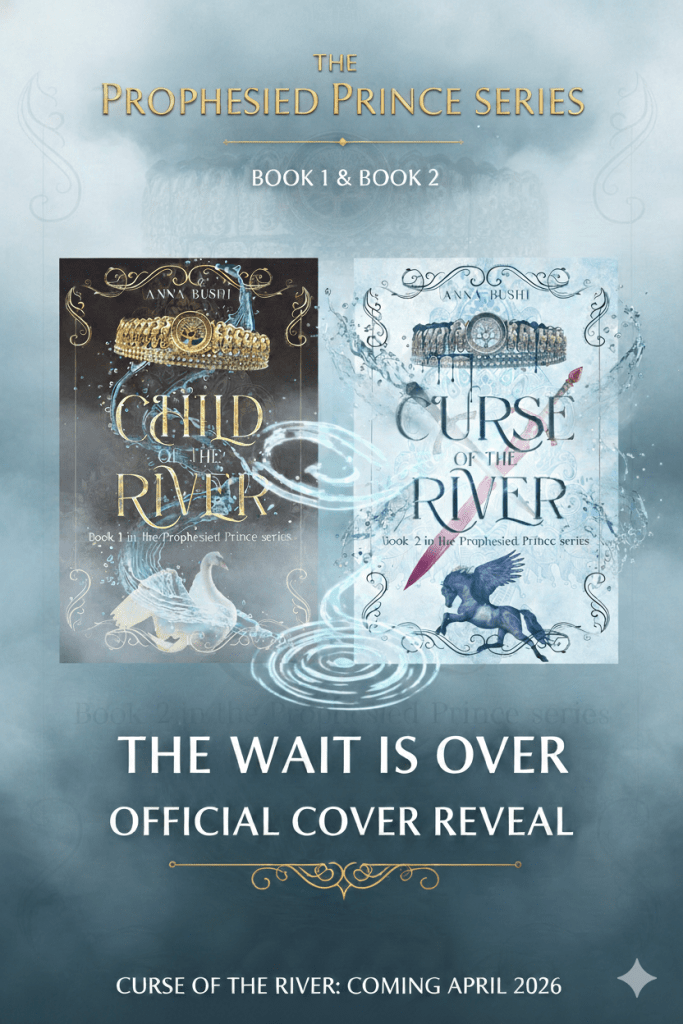
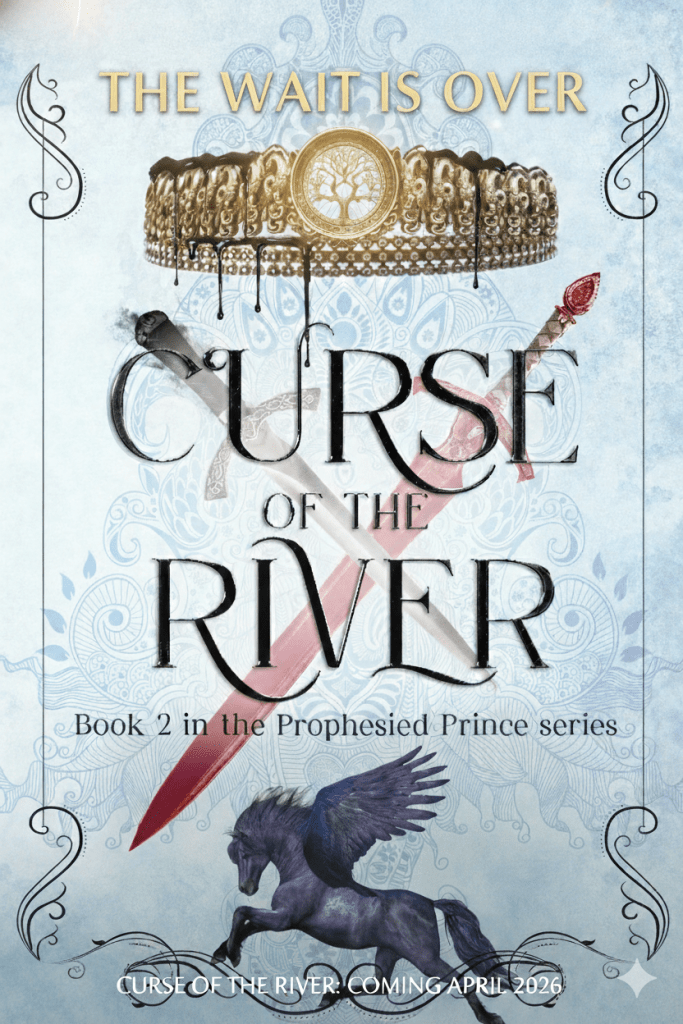
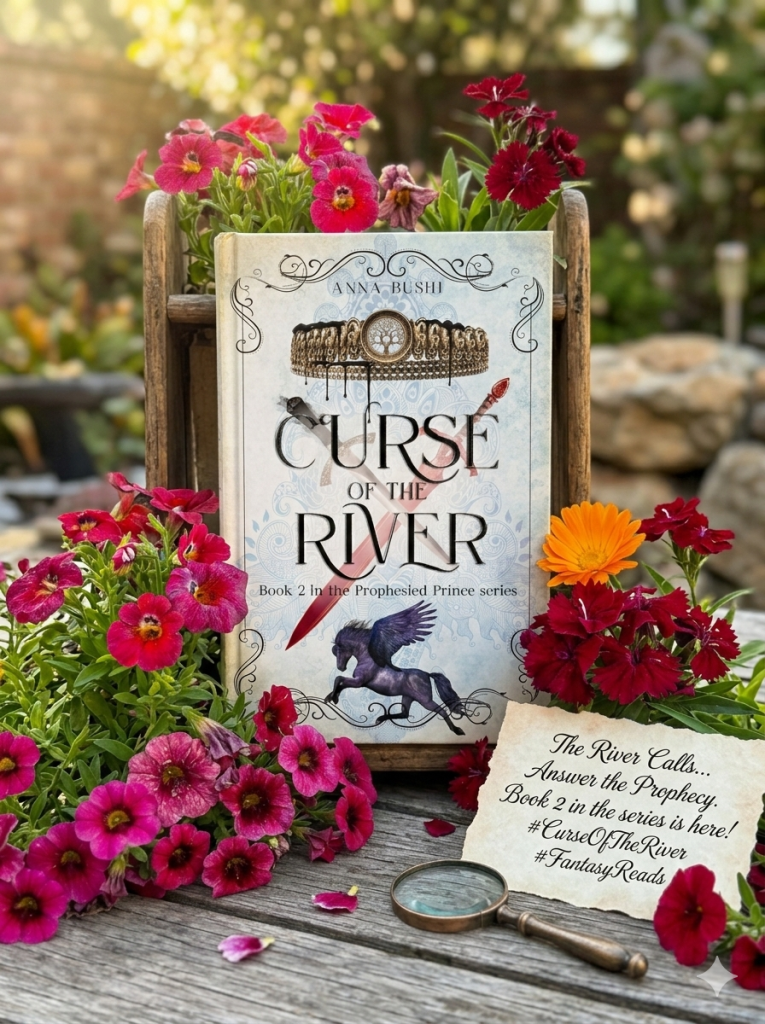
I am absolutely delighted to finally reveal the cover of my upcoming novel, Curse of the River, the second installment in the Prophesied Prince trilogy.

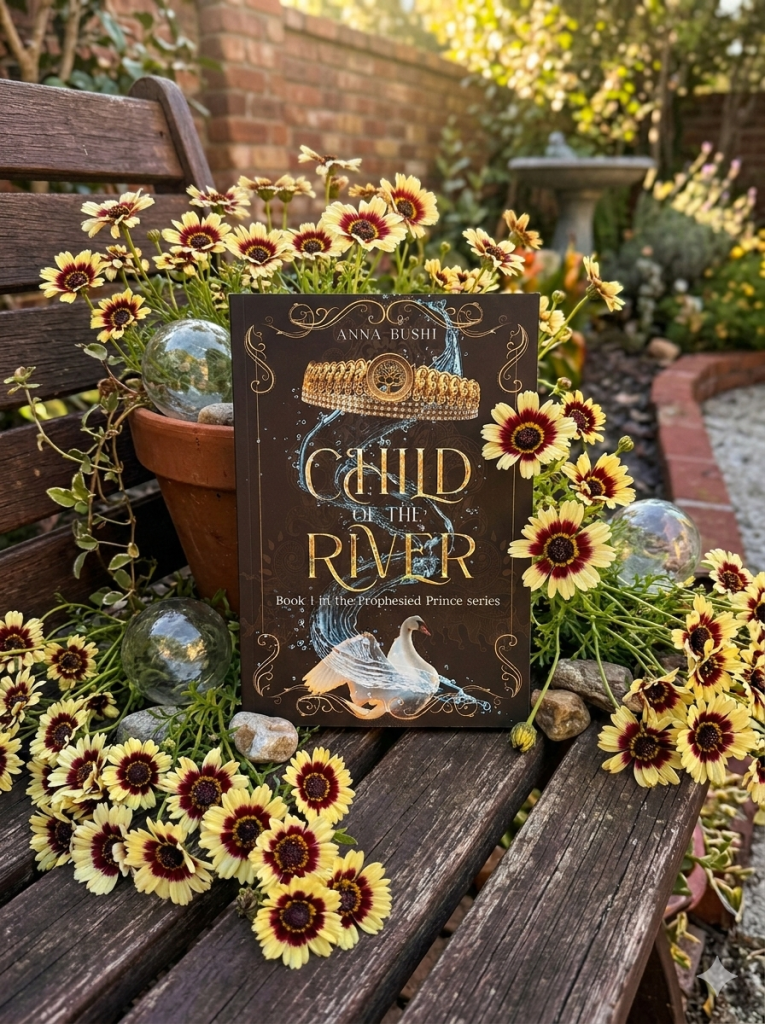
This cover has quickly become one of my favorites. To keep the visual thread tied to the first book, Child of the River, I have returned to the imagery of the crown of Kashgar. However, as the story evolves, so does the symbol of its power.

What to Look For:

  • A Muted Legacy: While the first cover featured a crown surrounded by cascading water, this crown is a much muted gold.
  • Darker Omens: You’ll notice something dark dripping from the crown—a nod to the fact that this sequel is a significantly darker journey than the first.
  • New Symbols: Instead of the swan, we have introduced a winged horse. This rakshasa (demon or monster) and other mythical ones play a pivotal role in the story, and I can’t wait for you to encounter them.
  • The Blades: In the center, you’ll see two blades crossing. They hold significance to the difficult path Prince Atul and Sugandha must walk together.

This cover perfectly captures the heart of this book and the growing danger lurking in the lands of Kashgar. Let me know in the comments what you think about this cover.